Thursday, October 04, 2007

Diaper Wars 2007

P&G Tosses Its Own 'Brick' at Rival K-C

Charges of False Advertising Leveled at Huggies Brand in Latest Diaper Wars


What these two do with brawn today, they used to do with brain. Faced with toddler migration to KC’s Pull Up diaper pants, we repositioned Pampers as Pampers Phases Developmental Diapers; introducing size 5 to hour glass shaped disposables, we arrested nearly $1 billion in toddler migration to KC that year with a strategy that convinced mom’s being a toddler was just another “phase” in the development of their newborn and infant. And look at our hands, no calluses – but getting brick layer’s hands might help some of P&G’s skin care lines.

But don't throw the baby out with the bath water. Maybe P&G should just run with this, show rebuttal ads with babies in the brick's place on a nice green park lawn. In the background of Central Park you hear the construction sounds of New York City. The voice over cuts in speaking for the diapering parent saying, "Pardon us. We're under construction." This kind of problem was also the impetus for us working with P&G to come up with the best part of waking up for Folgers. The strategy in part deflected career-making lawyers eyeing caffeine as the next nicotine. Come on guys, stop using lawyers and learn how to turn lemons into lemonade!
Don't let the linear-thinker, straight-forward problem solvers lay another brick and win!

Saturday, September 29, 2007

Marketing.fm

To my friends at Marketing.fm, "May the fource be with you." Is that something I can trademark like Pat Riley's "threepeat?"

Wednesday, September 26, 2007

Orville Redenbacher Gets New Campaign!

If I'd had more dignity than Crispin Porter + Bogusky, realizing that younger kids always want what older kids have, and had had a crack at handling the Orville Redenbacher account at ConAgra, given that I'd already gained the cultural experience of having worked on brands such as Healthy Choice, Banquet, Butterball, Peter Pan, Wesson Oil, Snack Pack, Hunts Spaghetti Sauce, Swift-Eckrich Meats and various new product assignments over the years, I would have approached the brand this way.

Why did Crispin Porter + Bogusky launch the Orville Dedbacher campaign? Because they could.

Advertising Agency Intellectual Property. Are You Kidding?

Whose Idea Is It, Anyway?
Quit Giving Away Your Biggest Asset

There is a problem protecting an advertising agency's work as Intellectual Property. You can't do it...because most agencies converge on the same positions as their client's category rivals, just saying the same things about their client's products differently - and focusing on the same selling dimensions.

Think I'm wrong? Check it out. Ask yourself, "What is a category?" Answer: A category is a bunch of brands all hanging out on a street corner all doing and saying the same things about themselves differently. If you were not in the category, or "something else," you wouldn't be IN the category.

Classic example: Folgers vs. Maxwell House

Years ago I was called to Procter & Gamble to assess a new, yet to be aired campaign with the global manager of advertising and market research. He unveiled a character named Mrs. Olson who was going to say, "Drink Mountain Grown Folgers. It's the richest kind." Mountain Grown was supposed to be the support point to the contention that Folgers was the "richest kind of coffee." Asked what I thought I said he and P&G were going to loose their shirts because they were just copying Maxwell House and "good to the last drop" by saying the same thing differently. He scoffed and produced research "proving" that this was a highly differentiating top-two box intent-to-purchase campaign.

So I had to break it down for him and all the suits who need things distilled to one word bullet points for powerpoint presentations.

I said look, you say your are the richest kind. The richest kind of what? COFFEE. What about your coffee is the richest kind? THE FLAVOR and AROMA. So for all the MBAs who need things in one word bullet points you are talking about the SENSORY selling dimension. How do foods and beverages look, touch, taste smell and feel.

Now lets look at Maxwell House. They say they're good to the last drop. What's good to the last drop? The COFFEE. What about the coffee is good to the last drop? THE FLAVOR and AROMA. So Maxwell House is talking about the SENSORY selling dimension too. You can't ever copy the leader and beat them. "You have to identify a different selling dimension that is more resonant and relevant to your audience - which is exactly the kind of homework we do."

He didn't listen. The campaign was launched and at the end of the year and at the end of the money not a single incremental pound of Folgers had been sold. I was called back to P&G, this time by the Division President and company Chairman who commissioned our company to do a little proprietary jargon-laden "homework."

By stimulating consumer minds with hundreds of product potentials, consumers began to talk about ground roast coffee in ways the client and agency had not previously heard. Heavy ground roast coffee consumers (the 20% of the audience that account for 85% of the volume) said that they needed their caffeine in the morning "to work and play well with others." Very Dale Carnegie. At work they consumed caffeine in the morning because product usage helped them "show their bosses they saw things other people miss." (Kind of prophetic) Understanding Monday to Friday consumption we inquired about weekends. Respondents stated that if their spouses or girlfriends tried to get them to do or say something before they had their first cup of caffeine, that would start an argument that would last all weekend. They needed the caffeine "to improve the human condition." The synthesis of all this thought led us to state, "We see, the best part of waking up is caffeine in your cup." The brand group went wild. "You can't sell this as a drug!" So we changed the words to the best part of waking up is Folgers in your cup. And that's how Folgers came to own the morning daypart.

Now THAT'S INTELLECTUAL PROPERTY YOU CAN PROTECT because it "differentiates." Rather than focus on taken for granded cost-of-entry SENSORY parameters no one could protect (of course you have to do and be these things) it became far more profitable and effective to focus on the CONTROL selling dimensions pertinent to heavy ground roast coffee consumers. That's the IP!

And in all these year no other GRC brand caught on until recently when Starbucks finally got it with their "THINK EARLIER" campaign. Also control oriented. Now P&G wants to sell the brand. Maybe they can't find an agency to take the business to the next level. I just believe they need to do new homework. The only thing that's happened is that the product and campaign have matured in their lifecycles once again. The brand really hasn't done any homework since 1982. So what's beyond SENSORY and CONTROL? What is relevant and resonant to their heavy user today? There lay the IP.

Martin Calle is an expert witness in marketing and advertising related Intellectual Property matters. As Chief Differentiation Strategist at Calle & Company Martin is currently writing a book for the holidays called "SEARCH SATISFACTION: Why marketers stop looking for better ideas once they find solutions they like."

Friday, September 21, 2007

Questions of Interest

Note to self: Attended focus groups for a pharmaceutical client recently. Shocked to learn marketers still pecked at the surface of their problems with them. Heard some questions from the facilitator I'd never heard before.

1) When you're not doing anything, does your body make any noise?

2) When you are still, and silent, can you hear yourself, and if so, what do you hear?


Are they working on some new affliction we don't really have? Do you have "social anxiety disorder?" (interpretation: RU SHY?) Do you have "restless leg syndrome?" (interpretation: R UR LEGS TWITCHING due to some recent uncommon physical activity?) So what are your best guesses on what's being worked on? I was just asked to observe. Ireally don't know.

Thursday, September 20, 2007

"Search Satisfaction" strikes 9 out of 10 marketers

Are you a victim of SEARCH SATISFACTION. Some years ago Miller Brewing was looking for a new brand idea and stopped searching when they found emerging Japanese dry beers - beers with less beer aftertaste. Have you ever met a heavy beer drinker with a problem with beer's aftertaste. Miller was chasing a solution looking for a problem. I led them to launch Cold-filtered Miller Genuine Draft instead, arguably their most popular brand today.

A marketer in your company for example is LOOKING FOR a solution to a problem. And when they find one they feel comfortable with, they look no further. Search satisfaction also aflicts doctors, who when diagnosing problems, stop when they think they have the right answer. Looking no further, they later find they are wrong an uncomfortably higher number of times than you and I would like to admit.

My specialty is positioning brands. I have hit a good many home runs. I have found that brands are like ten speed bikes. They have many gears they never use because search satisfaction stops marketers from doing more homework. There was a Renaissance Period in marketing. People did more digging then. Now we just shoot at commodities from the hip. My grandfather had a farm. My dad had a garden. I have a can opener. So my grandfather was much better at raising brands. Today’s CEOs just jettison brands, managers and agencies - like goals - people abandon their dreams when the price gets too high - when a little homework would have turned that flat C student back into a polished A. Another way to look at this is a way to turn mature earnings businesses back into rapid growth companies or how to reverse the effects of mature product lifecycles. I’d like to trade blogroll links. Can you toss one in my hat? Is that possible?

Viral Marketing

Compliments of Tim Harris at Freud's Finger. Viral Marketing always has to be a train wreck. In my parlance "accidents must happen." The trick for marketer's? Staging the disaster. Then spontaneity. Anyone want to do a Mattel Barbie and Ken in China story? "Oh nooooooo! Mr. Bill!" Would make great animation. Maybe we should let Michael Moore get ahold of it.

Wednesday, September 19, 2007

Act and Think Small to Win Big With Killer Ideas

If Leonard da Vinci hadn't taken a risk, he would have painted the Sistine Floor.

This post was stimulated in response to a CMO strategy article written by Peter Murane, president-founder of BrandJuice, a brand-strategy and innovation consulting firm based in Denver.

...But over the last 45 years creating breakthrough brand positions and new products, I and others have seen a dramatic lessening of those in business with an owner/executive or founder/executive mentality. Someone to grab a bull by the horns and run with it.
If you call Clorox and ask the receptionist for, "the leader in charge of innovation driving the growth of your company" all you'll get in response is dead air. If you ask for the CEO (they are that person) his assistant will send you to Phil (name changed) in packaging design. "Oh, I see, Phil in packaging design is in charge of the growth of Clorox." If you reach a brand manager, most prove unable to bypass or negotiate the management barriers and politics to a better idea. Old marketers will tell new marketers to test anything new in marketing they want, as long as it's not actually a better idea.

Innovation checkmate.

Let's just redesign our packaging, labels and delivery systems and call that innovation. Whew! Got that job off my desk. But making the old look new isn't innovation. It's everything above what you are supposed to do that counts.

I heard a saying once. "The first 40 hours a week you work goes for survival. It's everything over that that goes for success." And the sad truth in large companies is, we just see too many 40 hour efforts - even if you do work an 80-hour week.

Positioning strategies and new product breakthroughs are like ten-speed bikes. Most have gears they've never used. And so you fall short. Like the antagonist in that really great funny movie A Knight's Tale with Heath Ledger says, "You have been weighed, measured, and been found wanting."

Innovation stalemate. Or then again, maybe we're over thinking all of this. MAYBE THEY JUST DON'T KNOW HOW TO DO IT.

Back to you oh painters of the Sistine Floor.

May I Suggest That Blogger Sucks?

In America we've come to expect a certain level of customer service, and when there's a problem, some sense of rather instant gratification. So it comes as a suprise when I, who thinks of himself as a rather forgiving person, have a problem and absolutely no way on Earth to contact someone at Blogger, host of this blog, for help. By the way, did I say they're owned by Google, so they have the money. But they'd rather have you slog through support groups no one attends and no one answers looking for help no one provides. I even contacted Microsoft because my problem resides with internet explorer. Every time I go/come to by blog I get a message that reads:

Internet explorer can not open the page http://advertising-age.blogspot.com/. Operation aborted. Then you get that white Page not found page.

In support groups I've found that many "bloggers" are having this problem and to much avail, they too have found no answer or support. Microsoft's IE experts spent the day with me, I had a constant intercom conversation going in the background, and they have resolved that the problem resides in Blogger's servers.

Can anyone help?

Tuesday, September 18, 2007

Volvo Ads Inspired By ... Valets

The caption here? "So I'd recommend you buy the Volvo."

This is not the idea spotting reported in Advertising Age Magazine this week. It is Buick versus Cadillac Revisited.

So it has taken Volvo, Arnold and Nitro this long, and this way, to learn why doctors, dentists and other understated professionals of the 50's, who carried their confidence internally, bought Buicks while their "scream look at me" counterparts wore their confidence on their sleeves by buying Cadillacs. One brand represents ostentacious luxury you call a trophy while the other is understated elegance. It's the same rationale we learned to explain why two people with $400,000 to spend chose a Bentley over a Rolls Royce. Why does Madison Avenue let history repeat itself again and again, and then hold up remakes of old strategies, consumer insights and understandings as if they're new. Just because they're new to you busy learning everything for the first time?

What has happened here is that Volvo, Arnold and Nitro looked at a slice of one consumer culture (valets are members of a larger Culturally Influential Consumer Group called Walking Actors - people who work in service or information driven industries representing over half of the employed US population today)and found that valets can see the dichotomy between Cadillac and Buick owners; Volvo and Mercedes owners. One owner needs to be seen. The other really doesn't give a rat's ass about what people think. Classic Buick versus Cadillac. Nothing new here and not expected to move the needle. Volvo's just reexpressing all the reasons Greenwich residents have been buying Volvos for years. They're good, but they're boxy. Perception fits the New England work ethic of using up and making do - that's an Audrey Hepburn line.
An Amish farmer might not look out of place stepping up to a Volvo...and that might be a more interesting campaign. Who'd question those values?
VOLVOS and QUILTS go together like MERCEDES and MIRRORS.

SWIFT-ECKRICH SMOKED SAUSAGE is made by technicians in lab coats while KAHNS HILLSHIRE FARM'S are made by farmers in jeans and flannel shirts.

WELLS FARGO BANKERS are stuffed stiff starched shirts while WASHINGTON MUTUAL BANKERS are friendly Seattle residents - in blue jeans and flannel shirts.

Come on people, this is easy market research 101 - not the stuff of breakthrough campaigns.

GYST!!! By the way, if you don't have a subscription to Advertising Age Magazine get one.

Britney Spears Self. Moment of Impact Caught on Film at 11

Britney Spears Self. Moment of Impact Caught on Film at 11. OK, I know. Lame wordplay but I couldn't resist. Britney Spears herself so often it's a wonder she survives the self-inflicted wounds. I know. I know. I'm late and way behind the bash Britney curve. And it's bad manners, but Hollywood corrupts and absolute Hollywood corrupts absolutely. Nature or nurture, she's a product of her environment run amuck. Post nuclear Britney. Mutant Disney gene pool victim. Can these Disney girls file a class action against Disney? They didn't know fame would ruin their lives. They were minors when they got started. Maybe they should get a warning: Danger: being famous is hazardous to your health. Pitch in your own copy in comments.

Advertising Agencies: Sitting Ducks

Your client just left. You just lost the account. You feel like a sitting duck. Just slightly vulnerable. Has this ever happened to you? Artwork courtesy of Michael Bedard.

The TRUTH is, "NO ONE EVER QUITS WHEN THEY'RE MAKING MONEY." Would anyone care to share some of their client's exit strategies? I'll bet the truth is stranger than fiction.

Sunday, September 16, 2007

Hudgen's Heros

You remember the delightful misfits of Hogan's Heros don't you. Well, in true television tradition, it's time for the remake featuring your favorite Disney train wrecks. Cameo roles can include paparazzi favorites as well. Who would you cast, and in which role. We know the producers have been in touch with Vanessa Hudgens, Britany Spears, Nicole Richie, Lindsay Lohan and Paris Hilton.

Friday, September 14, 2007

Vanessa Hudgens, Disney Flunk Morality 101

Disney High School Musical star Vanessa Hudgens hits a sour note. If you don't already have the 411 google her yourself. Research shows younger kids want what older kids have. She'd probably spice up Kraft's Miracle Whip ads.

Thursday, September 13, 2007

Neuromarketing: Hidden Persuasion or Junk Science?

ANALYZE THIS! Neuromarketing is a bad pitch. Don't swing. (or as George Parker says, it was rubbish then and it's rubbish now)

You don't need neuromarketing to see if consumers lie. The truth is, when you talk to consumers, they can only tell you what they know. And they have been trained by expopsure to your ads and education - the lowest common denominator. In this environment I found after 45 years of consumer inquiry that if you ask consumers questions, you don't get the voice of the consumer, you get the voice of the inquirer through the question being asked - a form of bias that will lead you astray - and consumers wondering what to them seem to be dumb questions. Consumers are suspicious of advertisers, con men and thieves (you). But why bother with questions? As Atticus Finch said in To Kill A Mockingbird, "You can't ask a question you don't already know the answer to." And you only know so much.

So the only alternative is not to map or neuroanalyze brains or to ask consumers questions. The alternative is to stimulate consumer minds with in-depth, comprehensive, product-based written stimulative materials that cause them to think the thoughts they've not had about your products - sparking the creative process in earnest - and determining what really motivates people about your products. The materials prescribed cover product design, packaging, delivery systems, price, quality, image, attitudes, sensory, form, function, usage and over 500 other PRODUCT POTENTIALS or DIMENSIONS we've identified that all go into the perceptual mix.

In 45 years in packaged goods working with the cream of the crop I have found that if you ask consumers no questions they can tell you no lies - but you will know truth - and this is how George Mennen discovered that he should manufacture solid "Speed" stick antiperspirants - still the most popular today. This "question-free" process turned around brands such as Pampers, Folgers, Crisco, Pepto and many others for Procter & Gamble under the reign of 5 Chairman excluding Alan Lafely who is now letting the retailer tail wag the dog. It is also the root of the new product process that created Chunky Soup, Tic Tac Mints, Baked Lays Potato Chips, Cold-filtered Miller Genunine Draft Beer and 100 other code-cracking brands.

So whether it was Al Pacino or Robert DiNero who starred in ANALYZE THIS, analyze this.

You'll be wasting your time by helping neuroscientists make their next car payment. But the old marketers at the top, fearful of loosing their job, will tell new marketers to test anything they want - as long as it's not actually a better idea.

Clients exposed to Calle & Company processes (my company) stopped conducting focus groups years ago. And of course, we set the pace for the other early qualitative and quantitative pioneers. We concluded long ago that focus groups, need segmentation studies, in fact anything that put the consumer under a microscope put the consumer in an artificial environment - and no one performs well as a lab rat. So we stripped away the veneer of information gathering and measurement - in all of its ill-mannered forms - to avoid the pitfalls and poor traditions of question-based research. Our clients ended up hitting far more home runs, and their agencies put more award winning ads on Cannes reels.

Here is some advice I give to my family before we head to Del Mar, Santa Anita or Churchill Downs for the races. Give me the money. Go to the races. When you are done I'll give you your money back and you'll come out ahead. Don't swing. Neuromarketing is a bad pitch.

Wednesday, September 12, 2007

Honda's in Hot Pursuit of Gen X

With All the Boomers It Can Handle, Automaker Goes After New Demo

Generation X. Generation Y. Boomers. All nice macro targets - invented by someone else years ago. And made a buck at. Now just part of the drive-by marketing scenery. Does anyone remember VALS - SRI's values and attitudes lifestyle studies that came on the heels of our launching Culturally Influential Consumer Groups® years before the dawn of qualitative research?
Today, marketers talk about Generation X, Y and Boomers as if they really exist, and think about themselves this way...as if saying it makes it so. What do researchers tell their focus group recruiters? Go find me someone who identifies with being Gen X. Guys, this was all made up so someone could sell something to you! Now you buy into it! No wonder marketing's in trouble, and Madison Avenue's worse. The conned are being led by the conmen.
But what Honda and RPA's research doesn't show is the presence of more Culturally Influential Consumer Groups within these audiences. These are the real decision makers and trend leaders. Culturally Influential Consumer Groups like "Walking Actors" are not theatrical people per se. They are simply men and women who because of their occupations and lifestyles must come into contact with more people everyday. For this reason they are more concerned with the cars they drive and the statements that they make. The clothes they wear and the statements that they make. The foods they eat and how food makes them feel. And given that over half the working population now works in a service or information driven industry, that's a huge group of consumers that Honda has yet to learn how to talk to in a private and personal context. This is how you learn what really motivates people about your products. The conversation would be much more intense that the shot this effort will put across the bow. And there are over 250 other Culturally Influential Consumer Groups that will cause more consumers to sit up and take notice.
Expect a bunt and the runner to get picked off at first base here.

Monday, September 10, 2007

Chrysler Chief Sees Link of Housing to Car Sales

Excuses are all too easy for Bob. Blaming car quality is all to easy for us. In reality, Chrysler's problem is that they are trying to sell today and tomorrow's cars with yesterday's positioning strategies. Bob's position just lets everyone, including execs at the company and their ad agencies off the hook all too easily. Bob talks about "right-sizing" the business. BS. That just gives him an out and lets him set the high water mark wherever he wants to. The guys in the picture don't seem to be buying it either. In Detroit, or any category, speed is expensive, positioning is the highest octane fuel, how fast do you want to go? In all of these years Chrysler has never done the qualitative homework to look at abstract dimensions to find out what really motivates people about its products. Here's what the New York Times had to say.

DETROIT, Sept. 7 — Only a month after taking charge of Chrysler, Robert L. Nardelli is concerned that problems in the housing market and the broader economy are hurting car and truck sales, and he wants his company to draft a plan to respond. Click on the post title to follow the link to the article.

Tell Clients to Stick It, Then Watch as New Biz Floods In

Who knew publicly telling a client to perform an anatomically impossible act on your way out the door could be so good for business?

Cramer-Krasselt resigned the business as soon as CareerBuilder cited the weaker Super Bowl ads as grounds for calling an agency review, and Mr. Krivkovich said he was told that the unscientific Ad Meter poll was the sole reason for the decision.

In sales, telling a customer or potential customer to stick it is called "Indifference". It is one of the four factors of impulse under the anachronym FIGS (fear of loss, indifference, greed and sense of urgency) salesmen use to get people to say "Yes." It works like a Jedi mind trick. Imagine you're in a bar with your buddies eyeing the ladies. What's more attractive to the ladies, creeps in a group staring at them, or a bunch of guys off in a corner having their own fun and paying no attention to the ladies at all? The ladies will not pick the creeps.

Sunday, September 09, 2007

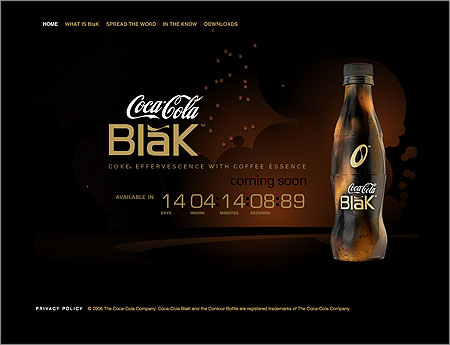
Obituary for Coke BlāK

I cut my teeth in marketing developing new products for Coca-Cola. My first assignment was to "identify future consumption drivers in soft drinks." Even became acquainted with McCann-Erickson Chairman John Dooner. At this time he was an assistant account executive on Sprite at Marshalk.

Expanding the brand's footprint is what Coca-Cola wanted to do, but in terms of identfying future consumption drivers, no consumer ever asked for Coke Blak. Coke offered a solution looking for a problem. Bites a manufacturer in the behind every time. Like Miller offering dry beer. Dry beer's promise, less beer aftertaste. Ever meet a heavy Bud drinker with a problem with the aftertaste of beer. Another solution seeking a problem. A double caf blast...half life=12 months. Starbucks tried the same thing with Pepsi seven years ago. Didn't work either.

Friday, September 07, 2007

Apple's Approach to Customer Relations

I thought you'd enjoy this Harvard Business Review conversation starter.

Apple's reaction to its angry customers has been swift. Responding to a flood of complaints from early iPhone buyers over a $200 drop in the still-new product's price, Steve Jobs responded by:

1. Recognizing that customers were upset


2. Recognizing that customers had a right to be upset

3. Explaining why Apple chose to drop the price -- and doing so in a way that appears legitimate and honest

4. Offering reparations to early adopters in the form of a $100 credit

No, Jobs didn't satisfy each and every disgruntled iPhone owner but, like JetBlue's response to its meltdown last winter, Apple recognized it had created a potentially big problem with its core customers and took swift and open measures to address it.

Would your company do the same thing or would it try to bury or obfuscate the problem? Not sure? Consider these ideas from Harvard Business Review to brush up on your approach to customer relations:

Want to Perfect Your Company’s Service? Use Behavioral Science

Why Satisfied Customers Defect

Companies and the Customers Who Hate Them

Manage Your Human Sigma

Putting the Service-Profit Chain to Work

You can't please everyone, but...I bought an iPod for my twelve year old daughter two years ago. Cost about $400. After the first year, it stopped working. She had dropped it without its hard case and dented the backing. The hard drive is built right into the backing and the warranty says that if there are any dents the warranty is void.

I tried to reset the machine several times. Frustrated, I made an appointment at an Apple Genius Bar. I was given instructions for resetting the iPod again. It still would not work. I had to buy a new iPod. But I wasn't ready to do that yet. I went online and made another appointment at the genius bar. The only available time was 8:55PM - five minutes before the Apple store here at South Coast Plaza in southern California closes. I went in. Met a different genius.
He fiddled with my iPod, then this is what he did. He said, "You know what?" I said "no." He said, "I'm going to give you another iPod for free." I was stunned, and reiterated that it was out of warranty AND dented. He said Apple didn't see it that way. He said, "At Apple we know people pay a lot for our stuff. We know that these people probably make a lot of money and are probably better than most at taking care of things. So when something goes wrong, we feel it's probably our fault and not their fault." So he went into the back room and returned with a brand new iPod.

At that moment I had rather been indifferent toward whether I used Apples or PCs. But that night I became a convert - and I will give Apple a lot of latitude before I jerk my knee and criticize them. Steve Jobs has been through a lot. And he knows that Integrity is doing the right thing when no one is looking.

And I experienced all of this through my contact with a 19 year old at one of Steve Jobs stores. Simply amazing.

This also reminds me of a story that circulates around one of my client's, Mercedes-Benz.
The owner of a 1981 Mercedes with 480,000 miles had a turbocharger that went bad. A new turbocharger was about $3,800, more than the value of the car today. But here's what the dealer did. He replaced the turbocharger for free. And the following year, rather than shop around, that Mercedes owner came in and bought a brand new Mercedes. Now that's customer service.

Thursday, September 06, 2007

BBDO Picks Up Agency of Record Duties for Monster

Five agencies in less than seven years! That's a bi-polar client and one who definitely has yet to figure out what motivates consumers about its products. Right now they're only using what they think they know. The way they switch agencies, or the way CEOs jettison brands and managements reminds me of that beer ballad, "99 bottles of beer on the wall, 99 bottles of beer, you take one down pass it around 99 bottles of beer on the wall. 98 bottles ...."
John, you may look forward to working with global teams to help the brand reach its full potential, but you'll only have about a year, less than the half-life of today's CMO. Joan Blackwood.

The problem with marketing is that anyone can define what is a better idea any which way they can when in reality speed costs money, positioning is the highest octane fuel and marketers today are not skilled at positioning. Oh they can plot it and measure it. But that's usually done by a marketer talking too itself about itself. When they throw it out there in advertising they just hope some of it sticks. Finding what truly motivates customers about your product takes extra-curricula homework. You can't just take what you think you know and shoot from the hip with it. You'll miss.

CMO Strategy: Companies Must Lift the Velvet Curtain

Management Can't Function Independent of Marketing

Wow! This bashing marketers for not having good positioning strategies is becoming a theme!


Face it. Chrysler, like many other manufacturer's, have yet to figure out what truly motivates consumers about its products. If they had, they wouldn't have yo-yo sales trends, and they wouldn't jettison brands, managements and advertising agencies. In the last 50 years, all I've seen is a proliferation of integrated marketing support devices employed which obfuscate the fact that they still have not figured out how to position products to consumers. So these guys are going to continue to sell tomorrow's cars with yesterday's positioning strategies. When are all these guys going to get tired of being the chum for the churn?

If marketing can ever figure out how to get them, let Chrysler manufacturing figure out how to keep them. THAT'S INTEGRATED THINKING THAT BINDS MANAGEMENT AND MARKETING.

Take Back Control of the Purchase

Hook Up: See Brand Value Rise by Creating Strong Relationships With Consumers and Retailers

LET ME RE-QUOTE HOW THIS ARTICLE BEGAN. "The retail trade seems to enjoy more control over the fate of a brand with each passing day."

THAT'S BECAUSE MANUFACTURER'S POSITIONING STRATEGIES STINK

"Years ago, my clients knew exactly what they wanted from in-store, demanded a certain level of performance and got it. Today, there is one brand major retailers such as Wal-Mart, Costco, Best Buy, Target and Safeway care most about -- their own. Marketers are squeezed by an empowered consumer, a controlling retail channel, and, on top of it all, a lack of predictability in the impact media truly delivers.

THAT'S BECAUSE MANUFACTURER'S POSITIONING STRATEGIES STINK. CONSUMERS NO LONGER ENTER STORES WITH A PREDETERMINED BRAND ON THEIR MIND

No wonder they are increasingly focused on return on investment and are zeroing in on where they can best measure results: at the point of sale.

THAT'S BECAUSE MARKETER'S DON'T KNOW HOW TO CREATE A MORE POWERFUL PRODUCT BASED POSITIONING STRATEGY - so they fall back on the easier things they can do. If they had a better positioning strategy, they could spend far less money on all this integrated marketing support stuff.

Positioning is the highest octane fuel. So how fast do you want your brand to go?

To Reach Today's Shoppers, Add Value

Give to Get: Motivating Consumers Where and When They Make Purchases Is More Critical Than Ever

According to the writers of this article in Ad Age, Nowhere is the need for shopper's ROI more important than in retail environments, where an estimated 80% of all purchase decisions are made. 80%! THAT'S BECAUSE THE MANUFACTURER'S POSITIONING STRATEGY SUCKS. So consumers don't go into stores to purchase predetermined brands!
How many times has this article run in the last 45 years? Over and over again we hear the importance of hitting consumers where they buy. Why all the focus on integrated marketing crutches? The nuts and bolts sales support efforts? Speed is expensive. Better positioning your product is the highest octane fuel. The question is, "How fast do you want to go?" The reality barrier (like a sound barrier) is that less than a handful of people on the entire planet know how to build a better product-based positioning strategy - and they're NOT working for you, or Coca-Cola. Christ! Coke can't even figure out how to stem carbonated beverage's slide!
Reading this kind of stuff in Ad Age year after year by each new generation of marketing expert is like watching the countless remakes of Cary Grant's Mr. Blandings Builds His Dream House, remade as Tom Hank's The Money Pit - which by the way is what POP marketing is unless you have a better positioning strategy. All you're buying is artificial life support to prop up a weak parity product positioning that isn't all it can be.
This is just a self-promoting piece by two DraftFCB renamed DaftFCB "experts". The examples they reference and the motivators are just scraping the tip of the iceberg regarding what motivates people about products. The CONVENIENCE, SMILE, EMPATHY and EXPERIENCE they espouse are all cost of entry taken for granted parameters, not the big deal closers. I can show you 100 more for free that are way more meaningful.

Wednesday, September 05, 2007

Cramer-Krasselt Wins Porsche's $40 Million Account

Carmaker Cites Indie Shop's 'Fresh Approach'

Can we interpret "fresh approach" as "I liked it?" Or that Porshe's ads will be more akin to Adidas. Hard to tell the difference. Both strategies give you sports, performance and style. Both products give you traction, handling and speed. We wouldn't sell excitement. That's Pontiac's turf. I'll take a pair. Size 11 please, in white - but as Chief of Differentiation Strategy here at Calle Company it's interesting to see that shoes and performance vehicles are both sold the same way. Is that why we tune out ads? Marketers converging on and spilling over each other's positioning strategies?.

Monday, September 03, 2007

Dave Disciples Flip Wigs Over Trendy Wendy

Despite Seeming Success of Saatchi Campaign, the Family Thomas Fumes

Another CMO shoots from the hip. For Wendy's CMO Ian Rowden it must have taken a lot of brain cells to come up with a Ronald McDonald spokecharacter with a five o'clock shadow. Visual shock jock or creepy molester. If I saw this man in the parking lot, would you want your child to run up an give him a hug?

Who needs differentiation with dignity? According to CMO Rowden embarrassment sells. Everyone likes to stop and stare at an accident. But at what cost? A little intent to purchase bump? Big deal. Ian, ya took the low road even though the ads are pretty funny. You'd do a lot better telling us why we should choose Wendy's over the millions of independent hamburger outlets across the land like Tommy's or Omega Burger.

The daughter of the chain's late founder Dave Thomas publicly slammed the ads in The Wall Street Journal as a personal affront (Melinda Lou Thomas -- better known as Wendy -- auditioned to appear in the new campaign, but Wendy's spokesperson Bob Bertini said consumer response to Ms. Thomas' screen test "was not positive.") Her sister, Pam Farber, also denounced the direction, and according to the Journal, Mr. Thomas' widow, Lorraine, has called for Chief Marketing Officer Ian Rowden's ouster. (Despite numerous attempts, the family couldn't be reached for comment.)

Darren Tristano, exec VP of Technomic, tooting his own horn said his food-industry research group used the Wendy's commercial as an example of the right way to target Generation Y at a recent conference, BUT, we're not certain who appointed them the judge.

By some accounts, Mr. Rowden's job is also in jeopardy. "When you talk to Ian, he says he's a change agent and all change agents eventually need to move on or die on the cross that they are dragging," said one person close to the account. "He talks like a guy soon to be moving on." Mr. Rowden denied he has any plan to leave Wendy's.

I bet Ian ends up writing one of those "How to brand it" books and ends up a consultant. What do you think?

Sunday, September 02, 2007

Portholes Remain Potholes at BUICK

Favorite Ad Blog Agency Spy has an open call for client horror stories, so I just left this post in a basket by their front door. If you have a few horror stories leave them in my comment box too. Feel free to name names and places. Like Dale Carnegie says, "if you've lived through it, you've earned the right to talk about it."

Was working with Buick and McCann-Erickson on the Buick Regal. It’s principal competitors were/are the Ford Taurus, Honda Accord and Toyota Camry - to better or worse extents these vehicles offer the bread and butter auto segment a nice synthesis of conservatism and sportiness. Their appeal is obvious and proven by their sales. I had the bright idea of debadging a black Regal and showing it at the auto show in Germany. I made an agreement with Porshe to test the vehicle as a German entry by Porshe into the mid sized US car market. People FLIPPED. European owners of Audi, BMW, Mercedes; Japanese owners of Acura, Lexus, Infiniti couldn’t wait to get their hands on one. People were writing us advance checks we had to decline at the show. With blacked out windows the car was a sleek runway and runaway success. Paula Travenia was head of Buick Communications at the time. Maria Shoemaker was in charge of strategy. Where the Regal only sold 40,000 units per year (including units going to rental fleets) versus rivals Toyota, Camry and Taurus sold 1.2 million each - quantification for the debadged Porshe-impersonating Regal revealed a domestic market of 800,000 units! And this was top flight top two box intent to purchase of 97%! All people wanted was for us to name the car MUNICH - and please use italics. We were stunned. Upon returning to the states McCann unleashed the entirely forgettable “Regal. Its a fine line between sport and sedan.” ad series with a Pierce Brosnan type driver. No consumer ever asked for one of these. And the character or “brand character” as GM calls it on their positioning statements was totally out of synch - unbelievable. The campaign died as did the Regal soon thereafter. Did the refs or players get payed to throw the game? We’ll never know. But it sure does seem strange that car marketers don’t know how to sell cars, once again proving that portholes remain potholes at Buick. Oh well, at least more of their ads are forgotten than remembered. That'sablessing - for now at least - until they again figure out how to connect and relate with consumers. You'd figure that after 50 years of selling vehicles they'd know what motivates people about their products. Guess not. Darn brand heritage styling queues keep getting in the way too. They like 'em, but we don't.

Opinion

Opinion is neither right or wrong, but thinking makes it so.

Saturday, September 01, 2007

Paul Stuart

My favorite fine clothing store for advertising and marketing execs in Manhattan and Chicago is Paul Stuart. Everything's superb.

Paul Stuart
Madison Avenue At 45th Street, New York, NY 10017
800 678 8278

Thursday, August 30, 2007

General Mills Will L'eggo Frozen Waffles

Strangled to death due to lack of marketing support or representative of the fact that General Mills never really figured out what motivates consumers about its products - the waffle business is now roadkill at General Mills. How can a breakfast company not know how to sell breakfast and address consumer's real consumption driver's. It wasn't price. It wasn't taste and it wasn't convenience. The truth is the marketer, its research, brand knowledge and advertising agency never looked beyond what they already knew. To borrow a line from Sci-Fi movie Dune, "You mean many had tried and failed? No. Many had tried and died." Incumbent knowledge sources did not have the answers. So why the allegiance?

No one quits when they're making money. Executives jump ship, CEOs jettison brands and switch agencies when the price of success - new learning - gets too high. LAZY. General Mills threw out the baby with the bathwater here. Watch the gears turn now as they divest the rest of the refrigerated/frozen dough business they've yet to figure out. Another solid case of lack of clear leadership by those who injected themselves into the business but did not do any consumer homework. Rather than double consumption and the size of the business they shot from the hip and missed a $1.6 billion target. Remember your job description? Grow the business. Under Mill's tutelage the business went from robust appendage to shriveled member. You couldn't have poured the syrup and missed the plate any better GM. And this was an easy business for novice marketers. Hate to see what they do on intermediate or difficult trails.

Note to management: Speed costs money. Positioning is the highest octane fuel. How fast do you want to go?

Belén Amatriain Corbi Joins Calle + Company

Joining the telecommunications and internet practice with a management career spanning over 25 years, Ms Belén Amatriain is the Executive Chairman of Telefónica Publicidad e Información S.A. (TPI), the leading company in the Spanish and Portuguese language directory market. Mrs Amatriain is a marketing and advertising specialist and joined TPI in 1997. After several positions in the company, she became Managing Director prior to TPI's flotation on the Spanish stock market in 1999. One year later, she became member of the Board and Executive Chairman of the company. Mrs Amatriain has led the profound transformation of the company which includes the implementation of the company's strategy on the Internet, the revamping of the publishing product, and the launching of new telephone information services. Mrs Amatriain Corbi has been a member of the recent committee of experts set up by the Spanish ministry of Science & Technology to study and propose an action plan for the development of the Information Society in Spain. Her work in the committee earned her the distinction of Spain's Grand Cross of the Order of Civil Merit.

Fear of Public Speaking

Public speaking is the number one fear in America. Public speaking is more feared than death and taxes. So how good are the people at your agency at public speaking? How good are the art directors and copywriters that speak for your brand? How good are you? Could you stand in the front of a Home Depot store for a day and hand out flyers saying, "Welcome to Home Depot. Can I help you find something in the store today?" Or would it be beneath you? Uncomfortable? Boring? If rejection didn't get you, your inability to maintain a great attitude would. So if agency people can't speak to people one-on-one, face-to-face, how could they possibly be good at connecting and relating to millions? They can't read faces. They can't mirror emotions. They have no experience. So when it comes time to write an ad, they can't look inside themselves and say, "Ah ha! I've seen that person before." Utilizing interpretations of markets and segments from studies and customer satisfaction surveys become a joke.

The nation's top breakfast cereal brand is probably Kellogg's Corn Flakes. I believe market share is around 6%. I believe the market share has always hovered around that number. Can you imagine how high market share might rise if Kellogg Corn Flake's Marketing Director went door-to-door, introducing the product to consumers again for the very first time? Oh, wait, that campaign was for Frosted Flakes. I digress. The campaign was a poor substitute anyway.

I can guarantee that if the staff of your agency, or Kellogg's Marketing Diretor took your product door-to-door every weekend, knocking on doors and developing the ability to actually TALK to consumers about your products your sales would soar. Now, the executives would reject the notion at first. Imagine dropping 10 or 12 of them off in some neighboorhood and expecting every one of them to speak with 150 to 200 people that hot summer day. Certainly they had something better to do that day that work at making themselves more empathic and better communicators. That's something they didn't learn when going to school. It takes life experience. And you can't gain that behind a desk or focus group mirror. If that were the job description 98% of them would quit. They'd be too embarrassed. It would be beneath them. The few that remained would persevere, getting better week by week. And after 6 months you'd have a crack team of people able to spontaneously connect and relate with just about anyone. What a great agency training program!
In addition to Martin's accomplishments in product positioning strategy and new product development, Martin Calle trains outsourced sales forces for Fortune 500 companies. Clients include Staples, Starbucks, UPS, AT&T, Verizon FIOS, Coca-Cola's Groupe Danone and more whose sales and market share have soared as a result of his training system. Contact Martin for Speaking Engagements and amazing stories from the street.

Wednesday, August 29, 2007

Down with Technorati

As sure as the Berlin Wall and Iron Curtain came tumbling down, I'm out to topple TECHNORATI for a long and loosing battle of providing incorrect link counts and false authority rankings. I'll link to you if you link to me. My new category under which you will be posted is TOPPLE TECHNORATI. Look for it in my sidebar.

Crispin Porter & Bogusky Seeks TiVo Answers

Well what an admission that people skip over their ads. Wouldn't it be better if they just did the homework required to learn how to create ads people wanted to watch? They inject themselves into the equation and end up creating ads we skip over. There are so many examples like this. If McKinsey consultants had the answers, then why does their consumer practice web site admit that despite solid balance sheets client revenues are down and executives wonder where the growth will come from? If you fire an advertising agency, isn't that admitting that in all these years you've never really found out what motivates consumers about your products? The truth stares you in the face, but you look past it for solutions elsewhere. We are truly blind. You know, not doing this homework and shooting from the creative hip is the same reason this agency parted ways with ConAgra and Orville Redenbacher.

Calle Creativity Summit - New York, New York - November, 9-11, 2007 - Host Cat Deeley

American Idol presenter Cat Deeley will host Calle & Company's 10th Annual Creativity Summit in New York November 9-11, 2007. Director of Differentiation Strategy Martin Calle says attendance has grown every year. Invitations closed August 29 and the event is sold out.

This year the conference will focus on product differentiation and why CEOs are more likely to jettison a brand or ad agency than look in-depth at the product to find brand boosting product-based marketing solutions to take the business to the next level.


CEOs chase consumer ears and eyeballs, they promote lavishly, but the anchors, the product's features and benefits can only take the business so far. The goal of the conference will be to present attendees with solution strategies. To illustrate, Martin said that M&Ms started out as a hard shelled candy. Nobody wanted it until Rooser Reeves found a more abstract under pinning; "they melt in your mouth, not in your hand." Martin says answers like this are so obvious, they're not obvious. Advertisers no longer think that way, substituting a product's reason-for-being with :30 seconds of buzz du jour dialogue. And advertising has taken a tumble. Martin says, "My grandfather had a farm. My dad had a garden. I have a can opener."


Breakouts will cover Multi-Dimensional Creativity® - a linking process that creates the conversation of creativity in consumer minds, Abstract Dimensioning® - the critical mass of connected thought that becomes available when stimulated into existance through the use of custom-created proactive materials. Question-based or Quantitative Marketing - pitfalls and poor traditions of gathering and measuring data, establishing Perceptual Monolpolies® - the lost ad process and more. A complete calendar of events is available from Calle & Company. future@callecompany.com

Multi-Dimensional Creativity®

Through the years marketers have told me their advertising agencies provide Multi-Dimensional Creativity without asking what it really is. And you know what they say about making assumptions. When you assume you make an ass of u and me.

Multi-Dimensional Creativity ® is a linking process that creates the conversation of creativity in consumer minds, the critical mass of connected thought that is not available until stimulated into existance through the use of custom-created product potentials creative materials. This proven consumer-creative processes sees possibilities before they become obvious.

Tuesday, August 28, 2007

PR Licensining Debate Ends Here

My comments are attached to the posting on David Reich's blog: my 2 cents. Read.

Visa Revamps Life Takes Visa Campaign

Wishful thinking.

McCann-Erickson's slogan is "The Truth Well Told." But they are not Visa's agency. Remember Dudley Moore's campaign for Volvo? "They're boxy but they're good."? Well here's a new potential future truth. Due to fallout from the continuing credit crunch caused by habitually over extended Americans, Visa has decided to revamp its "Life Takes Visa" campaign. The new campaign's tagline will be "My Credit Addiction."
My father invented The Green Card for American Express shortly after America went off the gold standard. That's when Americans never spent more money than they actually had. He called it the green card because he said it gave people "permission to live beyond their means. Just like A VISA!" The copy cats haven't fallen very far from the tree in all these years. In a carefully crafted well executed plot to grow the economy credit wielding retail consumers are the new serf. Dark Ages revisited anyone? Thanks Lee. Nice word play. Never have so many fallen so suceptible to the truth of so few.

Friday, August 17, 2007

If Imus Comes Back, Some Advertisers Are Likely to Follow

Buyers Mixed About Possible Return, but Say Sponsors Could Give Him Another Chance

He's great fly paper if you're a marketer into chasing consumer ears and eyeballs.

Chrysler Appoints Its First CMO

Lexus Marketing VP Deborah Meyer Gets Nod as Carmaker's New CEO May Slash Ad Budget

She'll be selling today and tomorrow's vehicles with yesterday's positioning strategies. The silent killer of more CMOs every year than any other cause of death. They never even see it coming. Those who want her business will pat her on the back. Those who know will tell her the truth.

Mattel Hopes to Reassure Parents With Print Ads

Toy Maker Buys Space in WSJ, Others Pubs After Second Recall in Two Weeks
How about finding some real "product-based" "selling solutions" to these marketing problems. The last time I confronted such a crisis I created Tylenol Gelcaps for McNeil to end the cyanide tampering issue and address consumer's real concerns forever. Utilizing the media was not a sufficient bandage then, and it may not be now. People want to see investment in real solutions. That way the door will not be left open for a "next time."

Integrated Marketing is a gun filled with blanks

Blaspheme. Blasphemer. Heretic. But in reality, integrated marketing over yhe years has grown to become a product or brand's life support system, artificially sustaining life until someone pulls the plug by switching agencies, jettisoning or divesting the brand to others who will go through the same process. Integrated marketing dulls the senses and slows the pulse, deadening the marketer's awareness to the fact that in all of these years, no one has actually figured out what consumers find most compelling that best differentiates the product or brand. It couldn't be advertising, because far more advertising is forgotten than remembered. It could't be integrated marketing. Reliance on integrated marketing is an adiction to the artificial life support system.

General Mills History Repeats Itself

Not long ago THE BREAKFAST OF CHAMPIONS lost. Positioning the brand as non-descript and generic "WHOLE GRAIN" rather than race-winning "WHOLE WHEAT" caused the brand to become delisted at major chain grocery and drug stores across America. But it reduced costs to employ non-descript whole grain. Now General Mills is rolling out the same campaign again, only last time it was one brand. Now it is all. Investors. You do the math. By repositioning Wheaties as WHOLE WHEAT again, I increased Wheaties distribution 24% and won Advertising Age Magazine's Annual Award as The Year's Best Repositioned Brand.

The Gaurdian of Product Differentiation

The Calle School for Product Intelligence
Guardian of Product Differentiation
http://www.callecompany.com/

Subject: Product-based selling-solutions solve all marketing problems

(Los Angeles) - You can’t power up brands with advertising if they’ve been fed a consistent diet of day-old-data-salad[1] for years. You need our Disruptive Consumer Intelligence®.

Switching agencies won’t power up your brands. It just needlessly upsets people who were doing their best when what they really needed was the knowledge to take your business to the next level. Switching agencies also won’t power up your brands because agencies don’t want you to have better ideas. Crafty Chairmen realize that Clio’s are the glass beads that impress. There’s no need for substance when bling will suffice. Agency execs know that if you actually had better ideas, you could then sell more of your product for less money. And what advertising agency wants that? But the truth is, if you switch agencies the required homework will still go undone. Who wants to pay for homework? It’s hard enough just to get clients to approve production budgets. Penny wise and pound foolish, brands subsist, year-after-year, on meager diets of day-old-data-salad.

Consequently, you don’t have to look far to find marketers who shoot from the hip and don’t do their homework. That’s what sent Crispin Porter + Bogusky to detention when they hit their dead end with ConAgra. Don’t act surprised. Not doing your homework is wide spread. You don't do it either. “There are plenty of smart, talented, successful people who are able to take their business only so far because of the limitations of their vision and leadership.”

Switching agencies, jettisoning brands, constant promotions, licensing, products unpopular in the face of changing consumer preference, the need for product placement, the ceaseless media pursuit of consumer ears and eyeballs and more are all signs that your company does not know what truly motivates consumers about your products. How much more profitable would your company be if it could get your brands off the artificial life support that has kept them going the past thirty years? In all that time, your company has not figured it out. We can differentiate your product so that consumers come looking for you. Schedule a meeting. Find out more. Reply today


[1] Day-old-data-salad is made with any combination of gathered and measured data.

Sunday, July 15, 2007

Look, No Hands! K-C's Bathroom of the Future

No slight intended but here's Richard Thorne, director of the washroom business at K-C, demonstrating the JRT Electronic Coreless. Ho hum. This is all so boring. Marketers such as P&G are looking for real lifechanging experiences to catalog as innovations and add to their new brand portfolio. If you were Kohler for example, you'd wonder how Americans would use the restroom in the future if their were no such thing as a toilet bowl or tank - hence no need for paper. Voices in the bathroom, 400 mph blow dryers and automatic paper dispensers just push the obvious to the nth degree. And no, the answer does not rest with moist toilet tissue. Exploration in perianal hygiene and moist tissue has been around since well before Tom Hatch and Mennen 36 years ago. Ho hum. How would we use the restroom if we were not allowed to use paper. Now THAT would lead to a lifechanging innovation! Would K-C be afraid to look under that rock?

Monday, July 02, 2007

Interpublic's Turnaround Effort Suffers Pair of Major Blows

Give a stew assignment to an advertising agency and the agency will extoll stew's features and benefits a hundred different ways (calling them campaignable ideas and USPs - Unique Selling Propositions). Give Calle & Company a stew and you get The Soup You Eat With A Fork. Chunky Soup was stew - positioned as a soup - and that's the difference between agency creativity and Calle & Company's definition of a product's Special User Effects ®.
For 100 years, companies and products have focused attention on features and benefits, the lowest common denominator, turning today's brands into commodities, contributing to clutter and inefficient advertising. Abstract Dimensioning ®, Calle & Company's proven comprehensive, trademarked process for the definition of a product's Special User Effects ® defines far more effective and consumer-desired new product and product positioning directions. The company's proven Consumer-Creative ® methodology exhaustively exposes consumer minds to the existence of over 10,000 Product Potentials ® - instantly stretching minds to expand a product's audience, reach and appeal. This Multi-Dimensional Creativity ® is homework unavailable from market research departments, product design, marketing, or advertising agency gurus and leads to the instant consumer creation of new and highly consumer-desired directions.

Monday, June 18, 2007

Yahoo CEO Terry Semel Resigns

A little disruptive consumer intelligence could go a long way to helping Yahoo tackle and topple google. Unfortunately, incumbent resources are wed to "specially designed" methods of gathering and measuring data. No one told them that you can't measure or "quantify" success into existence.

Saturday, June 16, 2007

New on Heads Up! On Organizational Innovation

Joyce Wycoff an innovation igniter ignited me (no pun intended) to think about a conversation I had with the head of HR at Adidas - the running shoe company - the other day. Read Joyces piece. Here were my thoughts to her.

"Bottle Neck" is an interesting term. Where does it begin and how does it snuff out innovation?
I was in an interesting conversation with the head of HR at Adidas the other day. He'd just returned from a conference of HR professionals discussing how to innovate in HR. The net net conclusion was that there is no recruiting innovation because all of these companies sort and sift talent the same way. When you get right down to it (for example) a vice president in marketing puts in a request for a marketing director to be hired who has very similar credentials as the requestor. Intellectual incest insues and innovation in the company grinds to a halt. Like a trend that starts on the east or west coast - what's "new" takes 20 years to emerge in the midwest.
Genetically speaking, hiring someone completely different would strengthen the genetic gene and innovation pool because a quant-jock can't measure innovation, creativity or invention into existance. It takes a gregarious process, not someone professing writing some ideas in a box, and others outside the box.


Yet, insanity prevails. What's the definition of insanity? Doing the same thing over and over again and expecting different results. Certainly (in a Matrix - Keannu Reeves sort of way) companies can claim to innovate. But in reality (what the don't or don't want to see), they more often converge on the same positions as rivals saying and executing essentially the same things their own ways with the slices of difference so small as to be measurably inconsequential in the business world. You can redesign a running shoe, you can turn a mop into a Swiffer, but at the end of the day, you have not sold an incrementally greater number of mops or running shoes. So what innovation was there? Making the old look new takes a lot of effort for sure. Pat yourself on the back for putting an old product through plastic surgery. But don't give yourself a reward. Since neither increased margins (GMROI) or market share there were no gains. So this innovation was a toothless tiger.


People over use the word innovation. Like Clara Peller said in the old Wendy's Hamburger ads, "Where's the beef?"

Thursday, May 31, 2007

Disruptive Technology

It is said that trends take 20 years to reach the midwest once started on the east or west coast. It is also said that teachers take simple things and make them complex, while communicators take complex things and make them simple. When I arrived as an undergradute scholarship track athlete at Indiana University in 1973 from Greenwich, Connecticut I was wearing cuffed khaki pants. Everyone on campus asked me where I got them and why was I wearing them. The polyester stretch Levi cord bellbottom culture had never seen baggie khaki pants before. It has taken Harvard Business School's Professors Clayton Christensen and YoungMe Moon (Disruptive Technology and Reverse/Stealth/Breakaway Positioning respectively) 25 years to discover the concepts and respin the disruptive Abstract Dimensioning (tm) and and Multi-Dimensional Creativity (tm) practices that fueled Procter & Gamble's consumer information, innovation and invention for the past quarter century. How about some homage to us? Thank you.

Sunday, May 27, 2007

Calle Company: Miller High Life Goes To Saatchi Saatchi

Calle Company and Miller Brewing teamed to develop Cold-filtered Miller Genuine Draft - arguably Miller's most popular brand. No one at agency or client level has developed as popular a brand or strategy since. Here again it sounds like someone on Madison Avenue threw a dart at the strategy telephone book and got lucky. The agency CEO says "OK, now we've got 'something' that works so we're going to expand it." Clinging to the account for the perilous ride, I'd have trouble sleeping at night not knowing how to find an even better strategy. But there are at least 500 ways to better position the brand found by utilizing the disruptive information creation techniques we've proven at Miller, Procter Gamble Pepsi and Frito-Lay. By the way, never used "LIFE is my favorite beverage" outscored every other tested strategy for intent to purchase via BASES when developed by Calle Company for the brand at the same time we developed MGD. Cavemen averting extinction by having a brainstorm insight on how they'd divert an asteroid heading toward earth won thunderous applause. www.callecompany.com This is one execution in a series as to how LIFE disrupted Budweiser and became everyone's favorite beverage.

Friday, April 27, 2007

Disruptive Data Technology

Disruptive Data Technology ®
How to succeed without asking consumers any questions.

Disruptive Data Technology ® is a proprietary data-creation tool exclusive to Calle & Company. www.callecompany.com The revolutionary data-creation process stimulates consumer minds with over 10,000 Product Potentials®, eliminating the pitfalls and poor traditions of question-based marketing. This proven system of invention, innovation, and information makes companies more valuable by generating proprietary marketing intelligence that can help you launch more successful new products and brands and get a foothold in new markets when tackling and toppling market leaders. Project owners charged with creating sustaining innovations profit from new not commoditized data, a distinct advantage over a company’s normal diet of day-old data-salad. Do you like to feel the thrill of insight when a solution that had eluded you, or straightforward problem solving suddenly becomes obvious? Here are many other good reasons why top companies employ exclusive Disruptive Data Technology.

· Jump Start! The process exposes target audience consumers to over 10,000 Product Potentials®. It gives everyone so much more to talk about than what they already know.
· Confidence! More CEOs are satisfied with their innovation ROI.
· Proven! By 100 companies including P&G, J&J, Pepsi and Frito-Lay.
· Experience! It takes less time to learn everything for the first time.
· Effective! Pound for pound marketing solutions deliver more-bang for the buck.
· Excitement! The process releases right-brain top-line creative and strategic endorphins.
· Collaborate! The process quickly builds conviction and consensus with everyone on the same page.
· Enthusiasm! We reveal deeply hidden, never before seen product features, functions, benefits and category attributes.
· Resurrection! DDT® turns poor concepts, bad ideas and line extensions into mega-marvels.
· Clean Sweep! DDT® is a proven clutter buster and differentiator for advertising and positioning strategists.
· Communicate! Americans fear public speaking. Exclusive Consumer-Creative® materials ensure everyone’s 100% participation.
· Work Out! The process exercises creative muscles that otherwise get flabby.
· Accountability! By asking consumers no questions they can tell you no lies.
· Level the Playing Field! The process eliminates focus group leaders who try to impress by pretending to be smart.
· Culturally-Influential® Insights! Reach far beyond linear trend, brand map, laddering, needs segmentation and agency reviews.
· Integrity! Consumers create. Someone else does not do the work or thinking for them.
· Awe! Answers are so obvious they’re not obvious. Solutions are abstract and more engaging, not forced or contrived.
· Freshness! DDT puts you a day ahead of consumers, not a day behind. In-Market solutions stay fresher longer.
· Allegiance! Consumers will not surf past ads as if they were 10 years old before they were new.
· Smart! The process won’t waste money reconfirming or reinventing the things you already know.
· Forward Thinking! Gathering and measuring data about things that have already happened is reactive. This process is proactive.
· Inquisitive! We all ask questions. We all ask the same questions. We rarely ask new questions. Afraid of looking dumb younger marketers won’t ask questions. Are we asking the right questions? When you ask questions you don’t get the voice of the consumer you get the voice of the inquirer through the question being asked, a form of bias that will lead you astray.
· Time Saving! A career’s worth of experience can be had in six weeks - much less than a lifetime.
· Patents! Deliverables are proprietary, not syndicated. There are no contracts. No retainers. No obligations for free proposals.
· Pragmatic! We don’t believe the words “SELL” and “SUIT” are 4-letter words.
· Work Ethic! DDT® proven faster and less expensive than any other business development activity. It gets things done.
· Commitment! Few people are pragmatic top line right brain creative thinkers. They need the help of our proven Abstract Dimensioning® and Multi-Dimensional Creativity® stimuli materials to jump start innovation.
· EASY TO REACH! 714.244.9511 24/7

Email: future@callecompany.com Web Site: www.callecompany.com

Monday, April 09, 2007

Clutter Polution Solution


Oh my God. Stop pointing fingers. When you do, remember that three fingers are pointing back at you. If you want to create effective ads that people pay attention to you must stop asking questions and start stimulating consumer minds with 10,000 product potentials offered by my firm. It will give you far greater learning latitude than you've ever peviously enjoyed! Why stop asking questions?


1)By the time you ask a question, it's too late. It's already happened and you are a step behind the consumer - that's what bores them - you are reactive.

2)Most Americans never went to college - your ads are above them, or beneath them - but because you are an expert, and they are not, it's hard to hit the target when you don't know where it is.

3)Rip a page out of sales training. When you are new at sales you do great, because you are new and enthusistic - then you become an expert and go into a slump - happens all the time. Net net. Too many "experts" make ads.
Why else should you start stimulating minds and slashing budgets with IRI, BASES, NIELSEN, etc.?
4)It’s faster and less expensive than gathering and analyzing data.
5)Consumer attention spans are shorter than 500-word USA today articles.
6)It gives everyone so much more to talk about than what they already know.
7)It’s proactive, not reactive - you create exceptions that become the rules.
8)It won’t reiterate the things you already know.
9)It sets sights beyond needs, segmentation, product features, functions or benefits.
10)It defeats commoditization.
11)It turns mature earnings brands and companies back into rapid growth businesses.
12)It focuses consumers on your objective, not their fears, worries and suspicions.
13)It increases consumer’s attention span. Dollars become more effective.
14)The yields are fresh, not soft and too ripe to ship to market.
15)Results are proprietary not syndicated.
16)No other company does this.

Saturday, April 07, 2007

Question based marketing: Pitfalls or a Poor Tradition


What's wrong with research? There is no "Ultimate Marketing Question." When you ask questions, you are always a step behind the consumer, never a step ahead.
(Background context: You can find plenty of smart, talented, successful people who are able to take their business only so far because of the limitations of their leadership and vision. Your organization's ability to grow is directly tied to your ability and desire to become a smarter, more talented and successful leader. That is the Law of the Lid. If you want to reach new level of effectiveness in your job, raise your lid. If you want to grow your company, grow your lid. If you want to increase shareholder value, increase your lid. Excerpt from The 21 Irrefutable Laws of Leadership by John C. Maxwell)

Prologue: It’s been 47 years since Calle & Company rocked marketing by creating a brand, Chunky Soup, by stimulating consumer minds with 10,000 Product Potentials - and without asking consumers a single question. Great ROI. Since then, the proponents of question-based marketing and analytics have pulled the wool over everyone’s eye – arresting the speed and development of the consumer product industry.

What’s important about finding marketing solutions without asking consumers questions? You are more likely to win more hands and eliminate bluffs. Imagine you are in a poker game facing 5 category rivals. You are dealt five cards: IRI, Nielsen, BASES, Landor and JD Power. You have a wild card, an advertising agency up your sleeve. You want to discard Landor hoping to draw a McKinsey, Bain or BCG, but realize, “Despite solid balance sheets and healthy profit margins, the US$ 2 trillion consumer packaged goods industry has lost much of its glow. Revenues and market values are flat, and executives wonder where the growth will come from.” None of the above have answers. So you fold – because the definition of failure would be to continue to do things the same way and expect different results.

Most CEOs report disappointment with their innovation return on investment. Most new products fail – because your company has been drawing data from the same deck for years - And when you ask questions you don’t get the voice of the consumer - you get the voice of the inquirer through the question being asked – a form of bias that will lead you astray.

14 REASONS why Calle & Company stimulates minds with Product Dimensions®

Calle & Company doesn’t ask questions. We invent information specializing in new product and product positioning innovation. Our 10,000 Product Dimensions give you far greater learning latitude than you’ve ever had before. Why do we stimulate consumer minds?

-Most Americans never went to college.
-It’s faster and less expensive than gathering and analyzing data.
-Consumer attention spans are shorter than 500-word USA today articles.
-It gives everyone so much more to talk about than what they already know.
-It’s proactive, not reactive - you create exceptions that become the rules.
-It won’t reiterate the things you already know.
-It sets sights beyond needs, segmentation, product features, functions or benefits.
-It defeats commoditization.
-It turns mature earnings brands and companies back into rapid growth businesses.
-It focuses consumers on your objective, not their fears, worries and suspicions.
-It increases consumer’s attention span. Dollars become more effective.
-The yields are fresh, not soft and too ripe to ship to market.
-Results are proprietary not syndicated.
-No other company does this.

Do you like to feel the thrill of insight when a solution that had eluded you suddenly becomes obvious? For thousands of years people have said that insight feels different from more straightforward problem solving. Experience this thrill more often. Contact Calle & Company. http://www.callecompany.com -
email: future@callecompany.com