
Showing posts with label Procter Gamble. Show all posts

Saturday, July 19, 2008

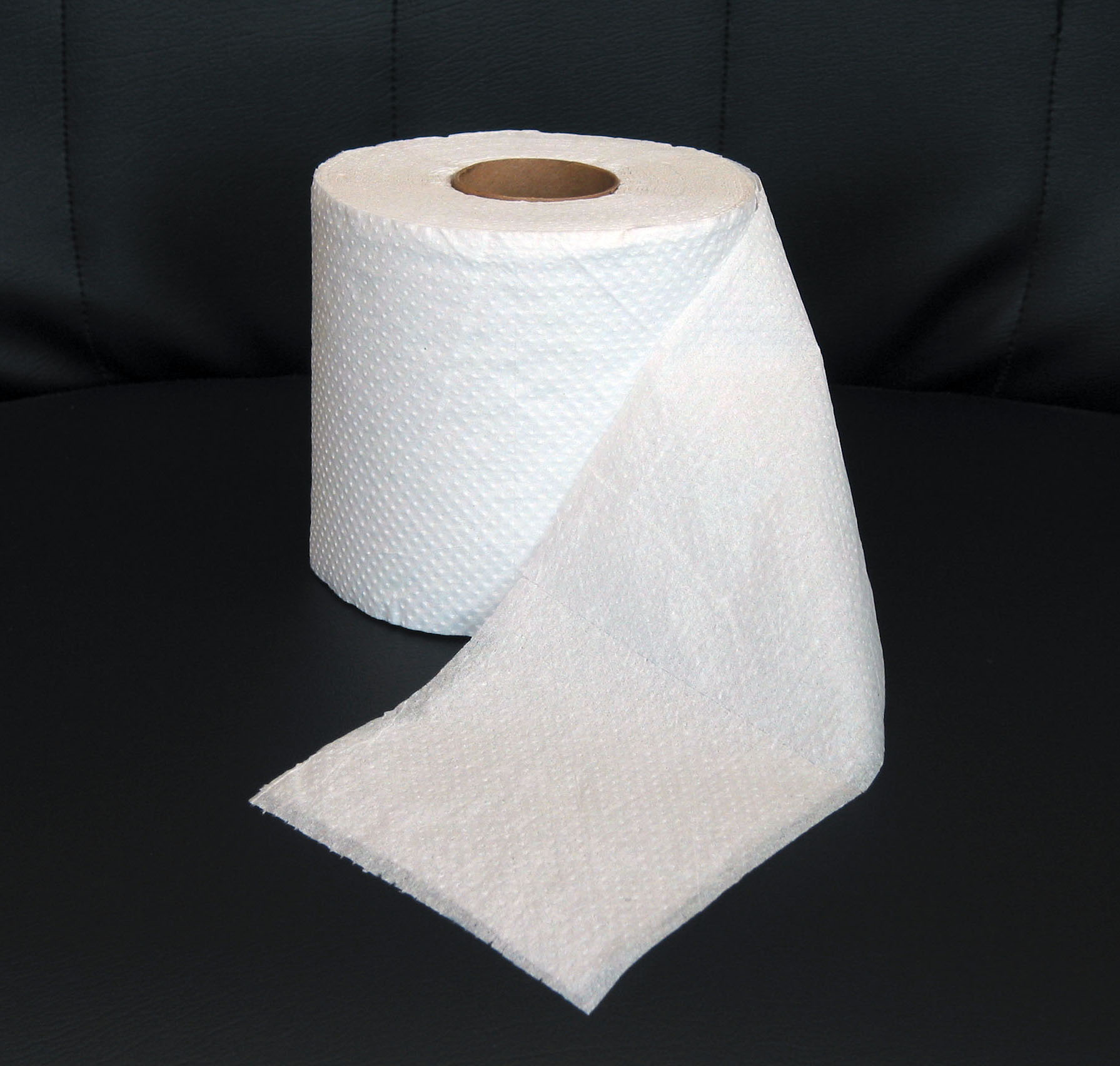
TOILET PAPER FOR DIETERS

One of the fun things about my job is that I get to have new product thoughts no one else has ever had; And the best part about the best ideas is that they always seem to draw connections between two things that have never been connected before, or that have no reason to be connected in the first place...like toilet paper and dieters. Knowledge is the by product (no pun intended) of my unique job in the consumer packaged goods industry (and believe me, I've learned more from the crappy ideas than from the billion dollar winners) - while everyone else is busy scurrying around gathering and measuring data, I create new knowledge for purposes of strategic innovation, consumer insights and new product concept development - quite a number of which have fallen into the 'heavy-hitter' category over the years, and more into the toilet bowl.

But you want to argue with the notion that no one has ever had the idea of "toilet paper for dieters" before? Maybe someone has - so go ahead and Google it because I couldn't find it. And why shouldn't Americans have the right to purchase "toilet paper for dieters." There's an obesity epidemic in America, so a lot of solid material from over consumption is getting flushed down the bowl while we simultaneously try to eat less. It's like a daily good cop bad cop routine. I stuff my face, then feel guilty about it convincing myself that one less leg of fried chicken or one less Pillsbury dinner roll is going to make a difference. I've been drinking Lite beer for years and it hasn't changed my waistline. I flog myself for a lifetime. Yes, one of my clients has been Jenny Craig.

But back to TP for Dieters. You snicker it's a silly idea. Oh yeah!? You wouldn't if you saw it rolled out by P&G and Charmin or KC and Scott Paper. After all it's been A LONG TIME since anyone innovated in the toilet tissue category. A roll of paper has been a roll of paper for since before your grandfather. People used to laugh at the idea of just having a second cold symptom remedy relief product. Everyone used Dristan and incredulously asked why they might need something else. Then we turned their tablet into a liquid. Prototypes were perceived to do a better job of providing night time tranquility. The day before every Consumer Packaged Goods executive laughed at the idea of segmenting the cold symptom relief category. The day after, they had NyQuil. They stopped laughing because NyQuil took nearly 70 share from Dristan overnight and opened the door for the flood of symptom relievers that followed. We just blazed the trail.

So is TP for Dieters a worthwhile idea? Probably not. Because it is the byproduct of my own mind and not that of consumers, and unless consumers say "make it so" the product has no reason-for-being. But if they did want it what might it be like? Would it be slippery or coarse, thick of thin, smooth like Lays or ridged like Ruffles? And why does it have to be flat? Can it be inserted? Would it change color like pregnancy tests to indicate carbohydrate versus protein metabolizing. How about indicating stool moisture content? (And they said I'd be embarrassed speaking with women about their daily hygiene needs for Maxi Pads and Tampons.) I THINK TOILET PAPER SHOULD BECOME DIAGNOSTIC. There'd be a great market in hospitals alone. Would there be different TP segments for people with different weight loss goals? People who want to loose 20 pounds this year versus 40. Is there a competitive segmentation for dieters on TV - Reality Shows like America's Biggest Loser? And then again, there isn't a single toilet paper that gives me a sensual pleasure. Why shouldn't there be one? Sure would make me feel better about over eating. I wonder if the Kinsey Institute for Research in Sex ever looked into this? Probably not because that's not where young executive minds go. But if a guy from IU can go there I'm sure P&G can too. But maybe again, the idea isn't worth the paper it's written on, and then again, maybe it is. Sure are a few technology patent ideas here if someone in innovation at Procter & Gamble or Kimberly-Clark isn't too busy. Googled that too. No patent filings to date. And they say agency creatives have all the fun creative ideas - or the humanists at companies like Ideo or Frog Design. How many've gone here? I bet zero. Because it's not something you can observe by observing existing consumer habits and practices - so that's where they and Clayton Christiansen's theories of disruptive technologies fall short. You have to be able to envision behaviors that have never previously existed and that is what we alone do with our Abstract Dimensioning Mental Processing.

Let's go on. Please help. Comment!

Thursday, June 05, 2008

My innovation beef with market research

Why don't I like asking consumers questions? Because I've been exposed to almost forty years of the best and brightest market researchers at companies from Procter & Gamble to Pizza Hut who ask questions. In all that time, the answer to every question only reconfirmed things we already knew - basically reinventing the wheel, which, if I was to focus on advertising is why so much advertising bores or desensitizes us. I found that no one could ask a question they didn't already know the answer to. When new generations of managers asked questions at these companies it was so they could learn everything again for the first time. In companies like Leo Burnett Advertising in Chicago, I've actually seen senior client service executives collect, secret and destroy the work of predecessors to protect their current position from better answers found before their time. I found that when you ask questions, you don't get the voice of the consumer, you get the voice of the inquirer through the question being asked - a form of bias that has led companies from General Mills to General Motors astray, or at least slowed or reduced their innovation return on investment. The root of all this doom and gloom? The fact that none of this question-asking ever stimulated respondent's minds - be they client or consumer - so that they could respond in surprising ways beyond their current frames of reference to hasten the pace of successful innovation and generate a consistent stream of important new disruptive technology and manufacturing patents and consumer new product concepts. So where's the beef? That is, where is the answer found? In processes that proactively stimulate consumer and client minds rather than those methodologies that reactively collect and measure data. In processes that create new knowledge, rather than in those that pre-ordain and then sell syndicated or predefined trends (i.e. Cocooning - let's write a book as a self proclaimed guru then go sell the answer to everyone so they can pull the trigger at a target at point blank range and go nowhere) data such as the existence of new subcultures of our population such as Thrivals or Basics or Adventurers - all those psychobabble social and behavioral target audience definitions that have put the brakes and blinders on so many brands by limiting their appeal through their contrived application (i.e.: Type A Strivers shilling for Cadillac). Or all those touchy-feeley product design firms who observe the here and now creating new Swiffers that do nothing more than replace old mops and refrigerators. Making the old look new. That's not innovation.

Tuesday, March 18, 2008

New Products: Non-Slip Toothpaste Tube

Just to keep this post simple: I brush my teeth in the shower. Do you brush your teeth in the shower? I wonder how many people brush their teeth in the shower? Does Procter & Gamble, Unilever or Colgate wonder if people brush their teeth in the shower? When will we know how many people brush their teeth in the shower? When will they distribute a non-slip finish on toothpaste tubes? If you google "non slip toothpaste tubes" you get zero results. The idea must exist in the new product twilight zone. Answers from the beyond.

Wednesday, March 05, 2008

How not to launch a New Coke

As CMO presiding over the launch of New Coke, Sergio Zyman rode herd over one of the largest and most important marketing blunders in history - proving that everything my father taught me about how companies and ad agencies typically create new products was absolutely true. He wanted me to believe that all ad men were crooks and con men and that they wanted clients to believe that they were the only people with phone lines to God on Fridays. He also wanted me to believe that when developing new products, most companies, including Coca-Cola did little more than set four men in a room to brainstorm - and when they did, it was usually over a supplier related concept rather than anything original. New Coke was based on a supplier's new sweetener, and it failed. Pepsi's Indra Nooyi took Procter & Gamble's Olestra and launched failed WOW! Chips with Olestra thinking the underwear staining grease would be overlooked by diet conscious consumers. Guess they were wrong. Why were they wrong?

They were wrong because they made these decisions themselves. Time and time again I'd watch inexperienced assistant account executives prepare recipe dissemination ads for Leo Burnett clients and no other input whatsoever. Take it to the account supervisor who takes it to the client and voila, another ad, another account, another sale bites the dust. We see it and forget it. Might as well be making newspaper ads for all the insight that goes into such productions - but hey clients, it's your money not mine.

I always preferred a form of consumer homework I used to employ that proactively stimulated consumer minds with hundreds of phrases covering all known and potentially hidden product dimensions that in some way shape or form might impact consumer perceptions. I put the creative stimulus packets in front of consumers, removing myself from the loop, and let consumers choose the most important directions. Because I didn't have to use my mind as the "Idea Broker" I kept hitting home runs for people like Coke and Pepsi, General Motors and General Mills.,

What's different about today? Executives in companies still don't like to do their homework.

Friday, October 19, 2007

Knowledge Takes 25 Years To Reach Procter & Gamble CMO Jim Stengel's Brain

For P&G, Success Lies in More Than Merely a Drier Diaper

Procter & Gamble Global Marketing Officer Jim Stengel talked about consumers, creativity and CMO tenure in an interview in a recent Strategy & Business Reader from Booz Allen Hamilton titled "CMO Thought Leaders: The Rise of the Strategic Marketer." You can access more of his thoughts here http://www.strategy-business.com/cmoreader ... But here's what I have to say ...

Well Jim, Thanks for hitting the nail on the head...again. Back in 1980 - 1982 Calle & Company was proud to be the very first new product and product positioning company to let Pampers and Procter & Gamble know that disposable diapers didn't just stand for dryness. By pioneering and repositioning Pampers as "Pampers Phases Developmental Diapers" in the very early 1980's we introduced size five to hour glass shaped disposables and convinced moms that being a toddler was just another "phase" in the "development" of a newborn or infant. And that was just the beginning of extending the brand's equity, arresting over $1 billion in toddler migration to Kimberly-Clark Pull-Ups that year. What we found curious was that by the end of the 80's P&G had dumped the initiative, or sent it into hibernation, until recently, apparently rediscovered again.

Friday, October 05, 2007

Death of an Ad Man

Ken Wheaton in Ad Age (AdAges) asks interesting questions. Why the ad man is a dead species. My take.

The ad man is a dying breed because what companies once did with their brains they now do with brawn. Take an article out of this week's Advertising Age Magazine for example.
Procter & Gamble wants to sue Kimberly-Clark over its ads that show bricks in purported Pampers. Why is Procter & Gamble "Thick as a brick?"

The marketers and management no longer know how to turn lemons into lemonade. Or to poke fun at themselves and have a good time. In essence, they've become the creative morlocks (the race of sub-humanoid creatures that moved underground in that H.G. Wells classic The Time Machine).

Why not just run with the joke started by Kimberly-Clark? Produce a rebuttal ad that replaces the brick with a baby. In the background you hear New York City construction sounds...maybe a few of those famous cat calls too. Then the voice over cuts in on a close up of the baby and says something seemingly apologetic like "Pardon our appearance while under construction." "Pampers." Cute. Cut.

Thinking further, the decline in business creativity also coincides with A.G. Lafley's tenure as Procture & Gamble's Chairman. On his watch retailers (the tail) wagged the dog for the first time in history. Costco so much as told P&G that unless P&G made a special formula Tide for exclusive Costco distribution Costco would not sell P&G detergents in their stores.
An that's the consequence of not being able to create highly differentiated products and product positioning strategies. And there's nothing the linear-thinking, straight-forward problem-solving quant-jocks can do about it until one of them morlocks decides to poke his or her head back into the creative sunlight founded by the earliest "qualitative pioneers". Do a Google search on that term!

There is something else that gets in the way of today's companies use of creativity in business. It's called "Search Satisfaction." People in companies, such as Procter & Gamble's legal/brand marketing brick layers stop looking for better answers once they've found a solution they like. (Hey, let's sue them!) So they don't look any further. Search Satisfaction also afflicts doctors who stop looking for a diagnosis once they've found an answer that fits the symptoms patients present. What's wrong with that? Well....doctors misdiagnose their patients a much higher percentage of the time than anyone wants to admit.

Thursday, October 04, 2007

Diaper Wars 2007

P&G Tosses Its Own 'Brick' at Rival K-C

Charges of False Advertising Leveled at Huggies Brand in Latest Diaper Wars


What these two do with brawn today, they used to do with brain. Faced with toddler migration to KC’s Pull Up diaper pants, we repositioned Pampers as Pampers Phases Developmental Diapers; introducing size 5 to hour glass shaped disposables, we arrested nearly $1 billion in toddler migration to KC that year with a strategy that convinced mom’s being a toddler was just another “phase” in the development of their newborn and infant. And look at our hands, no calluses – but getting brick layer’s hands might help some of P&G’s skin care lines.

But don't throw the baby out with the bath water. Maybe P&G should just run with this, show rebuttal ads with babies in the brick's place on a nice green park lawn. In the background of Central Park you hear the construction sounds of New York City. The voice over cuts in speaking for the diapering parent saying, "Pardon us. We're under construction." This kind of problem was also the impetus for us working with P&G to come up with the best part of waking up for Folgers. The strategy in part deflected career-making lawyers eyeing caffeine as the next nicotine. Come on guys, stop using lawyers and learn how to turn lemons into lemonade!
Don't let the linear-thinker, straight-forward problem solvers lay another brick and win!