Tuesday, April 15, 2008

Why Not Ask Questions?

Everyone else is doing it. Asking questions that is - in focus groups, quantitative research, qualitative research, strategic planning and innovation. So why not ask questions? Because if you always do what you've always done, you'll always get what you've always got. Which is answers that do not substantively move your business forward. Answers that confirm the things that you already know. Answers that move you closer, like gravity, to the same strategies all of your competitors are using coverging on exactly the same positions, only saying the same things differently. No gain.

So what do you do if you are Staples and the strategy that once made you all powerful now threatens to turn you into a commodity. Kodak, Starbucks can all ask the same thing. But the last thing they'd want to do is ask their customers questions. Sounds ridiculous right? Opps, that's a question.


You don't want to ask your customers questions because without additional positive mental stimulation, they will be unable to answer your questions from beyond their current traditional frame of reference and knowledge, They will only say what you and they already know. Further, you can't ask any questions you don't already know the answer to. It's kind of like a self-fulfilling prophecy. Why should Starbucks introduce $1 cups of coffee and who said that would impact their business? Are they doing it because there are now so many competitors Starbucks is becoming that commodity? So why respond with a dollar cup of coffee? It's not like going to Starbucks is out of the way, they're everywhere. They're not going to steal share and they're not going to stem trial of rivals products - so the move is an example of Starbucks running scared. I never heard of a Starbucks customer complaining about the price of a cup of coffee. Starbucks price is what made their product part of one of my aspirations. So now you're ripping the guts out of your brand by trading on price!? When you trade on price you go so low in terms of perception and brand equity (P&G learned with it's EDLP - everyday low price strategy) that you later have to climb up a ladder to get to the bottome or is that bottom? (I knew that)


And lastly, when you ask questions you don't get the voice of your customer, you get the voice of the inquirer through the question being asked - a form of bias that will lead you astray. So questions are dead you say? Yes! OK smarty pants - so why do attorneys ask questions and win cases with them? Because they are trying to prove a point in law, a static point, that already exists. It does not move. And to grow business you must. And why don't more people stop asking questions and start probing minds with proactive materials that stimulate activity to a higher level? Because they don't know how. They were bred from birth to ask questions. It's as easy as breathing - which is why everyone does it. Getting ahead without questions is much harder. It is the road less taken - which is why it wil take you farther than you need to go.
So don't ask questions. Look what happened to the joker.

Monday, April 07, 2008

Marketing to Germphobic Societies - Turning next generation men into residential mice.

Or should it be the other way around - turning today's residential mice into men. Years ago the Boy Scouts of America started watering down the Boy Scout Handbook, and in my mind easing qualifications for advancement in rank in an effort to remain competive with the abundance of activities competing for a share of young boy's time. This is not a condemnation. What I'm saying is that less information is provided in more detail in today's scout handbook than I had in mine related to sheer survival skills 40 years ago. Now granted I'm an Eagle Scout and can survive with just a knife in the wilderness, even caught and ate a squirrel on my Order of the Arrow Ordeal. But never have I seen this more in evidence than in a scout outing with my son's new troop this weekend. Granted all the boys in his patrol are young, and less than "experienced" scouts - all are still working on tenderfoot or second class requirements. But the first thing I saw plopped on a table as the tents went up was a bottle of Purell. Now that in itself is not bad, but what I found disturbing was the boy's need to pump that bottle every time they touched a dirty stick, played in the fire, picked up a rock or gathered firewood. More, rather than be the example of what the boys should be doing (ie: demonstrating the Boy Scout way to prepare meals over an open fire, one dad showed up with Lunchables in his knapsack to feed himself. Self reliance has gone to hell in a handbasket here and I'm going to turn it around! It isn't that the parents attending were doing anything wrong, admittedly they'd never been scouts. So I started teaching scout skills. When I was a scout the challenge was to be able to build and light a fire with just one match. And if that match went out, you were SOL - and in a real life situation probably dead. When done, I challenged the boys to gather their wood, build their fires and then we'd have a competition to see who could light a fire with one match. An indignant parent stepped forward suggesting that that was too much pressure on his child and that he should have all the matches and chances he wanted. I asked him if he thought if in a survival situation that was realistic? - I was trying to teach the boys that in a survival situation they needed food, shelter and warmth. What was his child to do to provide warmth, if he did not even have a match? This is the Boy Scouts for Christ sakes and I'm trying to teach the boys to BE PREPARED. One dad slept in the back of his mini van instead of his tent anyway - guess comfort is king. The demonstration went on without a hitch. I lit two fires, each with one match - still not too rusty after 37 years away from my scout experience. I admitted that it took me 20 campouts before I could light a fire with just one match. Just one problem. I assumed the boys knew how to use matches. They didn't. So it's back to square one on the next campout and before we move on to the different types of fires: cooking, signaling, etc. More on turning boys into men later. One thing for certain, those boys thought the challenge was cool, and they all had lots of questions. Good men!

Wednesday, April 02, 2008

OraQuel ® - Lowers the incidence of heart disease

OraQuel ®
Toothbrush rinse lowers the likelihood of heart disease.

(OraQuel® is not a drug, over-the-counter or prescription pharmaceutical) Every time you brush your teeth you increase the liklihood of heart disease and arterial damage. The effects are cumulative over a lifetime. Medical studies link heart disease, arteriosclerosis and the oral plaque that accumulates in arteries and on heart valves (as a result) to poor oral care habits, gingivitis and periodontal infection. Deposited on arterial and heart valves and walls, the majority of oral plaque comes from gingivitis and periodontal gum infection.

OralQuel® lowers the incidence of daily gingivitis and periodontal infection by assuring you a clean toothbrush. Directions: To lower the incidence of reinfections, shake excess water from toothbrushes immediately after use. Pour approximately a half-ounce of OralQuel directly onto toothbrush bristles, assuring penetration to root of bristles. Wait 1 minute. Product may cause slight foam to form between bristles. Rinse and store your toothbrush as you would normally.

OraQuel®, is a new product from CalLabs, the research and development arm of Calle & Company. To order OraQuel® (16 oz.) send $19.95 (+$3.95 S&H) (cash, check or money order) to Greenwich Marketing, Inc. 18881 Patrician Drive, Villa Park, CA 92861. Make all checks payable to Greenwich Marketing, Inc. Please include your name, address, phone number and email address. Get 10% off orders of four or more. All transactions in USD. Returned and NSF checks subject to all fees and $15 handling charge. International customers please add $9.95 shipping and handling.

Find out more about OraQuel® at www.OraQuel.com

OUT OF GAS. How to Know We Are Really Out of Gas

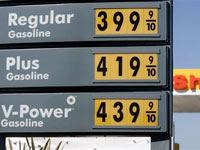
I find Energy Marketing an interesting subject. With gas hovering near $4 per gallon and a barrel of crude running $111 consumer confidence hits an all time low every time one looks at the gas guage - your constant daily reminder of how things are. Now, the oil companies say that profiting $20 billion per company per quarter, or $120 billion over all last year is in line with what other companies make - and given the cost of exploration and development, it seems oil companies may not be making enough. So here I am on their side.

But where I am not on their side is when they raise the price of gas because they say they have a "fear" that something "might" happen - that we pay through the nose retail because of their lack of confidence. That's a leadership issue and it lands squarely on Washington's dinner plate. Of course the middle east enjoys the $111 a barrel scenario because it funds the massive infrastructure construction projects going on in Dubai and elsewhere. Is Washington building itself a retirement community, a VIP Leisure World in the middle east at American's expense?

But I'm off point. My point was, "How will you know when we're really out of gas?"

Back in the day I was brought in from outside to save several accounts at Leo Burnett. The term they used in my offer letter was to "bring a breath of fresh air" to accounts such as Kellogg, Philip Morris, Nestle and McDonald's. A rare opportunity given that Burnett is very well known for not hiring outside the company. Anyway, early on, I was asked what I thought about Philip Morris' pending purchase of Kraft by EVP Client Service William Lynch. I told him my read was that tobacco was becoming politically sensitive and that PM was preparing to reduce its dependency on tobacco profits. I was scoffed. But sure enough, within 5 month Philip Morris had acquired Kraft. Vindication sure tastes sweet. PM dependency on tobacco profits plummeted from 96 to 56 percent, with the acquisition of Miller dropping that figure to around 46 percent.

So how will you know when America is really out of gas? When the oil companies start buying other companies. They'll be in a scramble to reduce their dependency on oil profits.

But right now there is no sense of urgency. And that's because the oil companies know they have years of oil profit ahead. That's also why they've only dumped a paltry $3.5 billion into alternative energy. Just enough to keep the pliable liberals and global warmers happy. So what's the conclusion? Right now there is no gas shortage, we are overpaying at the pump, face time with Congress buys Big Oil a little more time while we idiot pawns feel vindicated Big Oil's getting its wrist slapped by Congress - they are the actors and we are the audience. Will you applaud, or ask for a refund?

Tuesday, April 01, 2008

The Grand Unified Theory of Creativity

I am approaching 40 years of experience mumbling and working with Madison Avenue ad agencies and their clients, finding strategies that invigorate the sales of products, brands, categories and industries. Beneath the surface I've sought what I call The Grand Unified Theory of Creativity - what is it that would give a client the single most comprehensive yet concise view of all product and positioning potentials available to their business. While this search with my clients has allowed me to amass many career's worth of experience in less than a lifetime, I still wonder why more people don't get it - knowing as I do that they can go farther than where they are, expanding their product or strategy's Viability Envelope, by just tipping the creative tea cup a bit further - in the same way shifting from 'fit' and 'dryness' to 'development' dramatically expanded Pamper's industry footprint?

Letters back from companies such as Starbucks and their Senior Vice President of Category Management state they have plenty of specially designed resources available for the gathering and measurement of the required data - never realizing that you can never measure your way to where your business can go. Again I ask, "So why don't they get it?"

No one is talking to Starbucks (or any company) about The Grand Unified Theory of Creativity (google "the grand unified theory of creativity" in quotation marks and you will find I am one of only two people on the planet thinking about it, and the other guy wants to be a western writer.) And Starbuck's 'gathered' and 'measured' data is doing nothing to reverse the fact that the strategy that once made them most powerful is now being copied handily by every other Tom, Dick and Harry coffee purveyor.

Strategic Innovation, and The Grand Unified Theory of Creativity is about Multi-Dimensional Creativity. Another one of those terms that companies such as Starbucks tells me is provided by their ad agencies (really?...so if you google the term "muli-dimensional creativity" why don't any advertising agencies pop up in results?)? Multi-Dimensional Creativity is about that comprehensive/concise justaposition of which I spoke earlier - looking at fractions of millions of strategic options in the blink of an eye. That's just to get the linear thinkers out of the starting blocks. It doesn't come from the user-generated input websites touted by Chrysler to get them closer to their customers. It's the Abstract Creativity, The Abstract Dimensioning that ensues that makes the obvious special. (and that's not covered by any ad agencies or strategic innovators either).

So say you are Staples, and the strategy that once made you so powerful, and the first to consolidate office supply acquisition, is now so copied that you've become little more than a commodity; what do you need to shift your business strategy from strategy maintenance to strategic creation mode? You need to visit a fine tailor and get your new grand unified view of creativity custom tailored to fit you.

Monday, March 31, 2008

Making A New Run At Strategic Innovation

Conversation Starter:
Making A Run At Strategic Innovation

What do you do when the very breakthrough strategy that once made your business uniquely powerful (Staples, Home Depot, Starbucks) now threatens to turn you into a commodity rivals find easy to copy? Whenever I get an assignment from a client shifting from strategy ‘maintenance’ to ‘creativity’ mode I employ Multi-Dimensional Creativity to lift an industry or brand past previous benchmarks.

Creativity Is Not Just An Ad You Watch, See & Hear

MULTI-DIMENSIONAL-CREATIVITY® - To redefine an industry’s original breakthrough strategy, define new underpinnings and to get tongues wagging again (or to invigorate a brand, create a new product or envision a new category) we first sit down and list out over 500 product dimensions concerning that product, brand or industry that in every way shape and form impact and influence consumer perception and purchase behavior. Under each dimension; sensory, form, function, usage, image, attitude, price, packaging, delivery system, segmentations, transitions, escape, reward, heritage, trust, tradition, affluence and hundreds of other dimensions only we know of, Partners bullet point another 500 short phrases per dimension that in every way shape and form may potentially positively impact and influence consumer perception and purchase behavior in that industry, category or segment. When done we will have amassed about 250,000 phrases - many times the number of ideas an advertising agency or company brings to the table in their brand's lifetime. From this list we hand-select 500 to 1,000 phrases that we put in front of consumers so that consumers can select the phrases that best motivate them to try a product once [again] and if they try it and like it to buy it again. We employ this Consumer-Creativity® via our comprehensive Creative Stimulus Packages as the foundation for the highly-differentiating and salable new breakthrough business strategy concepts that result.

Has your brand become a heavily price driven commodity? Do you manage business strategies that compete in heavily price driven categories? Dot coms Expedia, Travelocity, Priceline, Orbitz and Hotwire are great examples of heavily price driven commodity brands. And as Procter & Gamble discovered with EDLP, once your consumer sets their sights on price your equity sinks so low you have to climb up a ladder to get to the bottom – enabling retailers (Costco) to finally get a leg up on P&G and call the shots on core brands like Tide.

In this environment, CallĂ© & Company has demonstrated a consistent track record of reversing the effects of mature business strategy lifecycles – of turning mature earnings companies back into rapid growth businesses. We ask consumers no questions so they can tell us no lies. We prefer our proactive Creative Stimulus Packages to reactive market research to create new knowledge - once again leapfrogging existing frames of reference, and competitors, with strategies rivals will find difficult to copy. P&G’s Paper Division employed our process, shifting Pamper’s strategic focus from ‘fit’ and ‘dryness’ to ‘development’. Repositioned as Pampers Phases Developmental Diapers the brand arrested category migration to rival Kimberly-Clark’s Pull-Ups, providing a much broader base from which to develop the paper business and net an incremental $1 billion in disposables sales each year. K-C never caught up.

CallĂ© & Company does not cut and paste strategies from one industry or company to another. I have no canned answers as do the experienced advertising agencies on Madison Avenue. If you would like to determine optimum future business strategies, let’s meet.

Saturday, March 29, 2008

Tarney Spencer Band


The world's most underplayed one hit wonder - No Time To Loose. Potential Ad uses. Analgesic advertising, 30 day promotion music. Sense of urgency.

Wednesday, March 26, 2008

OBAMA-pop

Like him or not, it's still a great poster.

Chrysler Ready To 'Listen' On New Site

Like they hadn't been listening? As reported in Advertising Age Magazine (http://www.adage.com/) The Automaker is to Recruit an Online Consumer Advisory Panel.

It's not that the online sessions won't be that informative, or that Chrysler won't be doing anything with the information. It's just that all the other auto manufacturers collect exactly the same bits of infomation - promoting a parity situation in which Chrysler will be unable to budge it's distant 3rd position in the market. Typically, this type of consumer input substantively fails to move the sales or market share needle - let alone consumer interest and involvement.

So why does Bob Nardelli keep signing the checks for VP - CMO Deborah Wahl Meyer who is very busy learning all of this for the first time? Does she not know that:

To get ahead, you have to learn things no one else knows. To CREATE THAT KNOWLEDGE you must follow the following recipe to stimulate consumer minds to say things they'd never otherwise think to say.

To invigorate a brand and find out what people want we first sit down and list out over 500 dimensions concerning that product that in every way shape or form impact and influence consumer perception and purchase behavior regarding that brand or product. (Otherwise they just talk about cup holders and places to put their Garmin or Tom Tom.) Once done, the real work begins. Under each dimension; sensory, form, function, usage, image, attitude, price, packaging, delivery system, state changes, reward, escape, heritage, trust, tradition, quality, awards, rewards and many other dimensions only we know of, we bullet point another 500 short phrases per dimension that in every way shape and form impact and influence consumer perception and purchase behavior. When done we will have amassed about 250,000 phrases - many times the number of ideas an advertising agency or company brings to the table in the lifetime of a brand. From this list we hand-select 500 to 1,000 phrases that we put in front of consumers so that consumers can select the phrases they like best and that would compel them to try a product once, and if they tried it and liked it to buy it again. We employ this Consumer-Creativity® as the foundation for the highly-differentiating and salable concepts that result for companies from General Mills to General Motors, Procter & Gamble to Pizza Hut.

Tuesday, March 25, 2008

Innovation Gone Wild

Innosight's President Scott Anthony made an interesting post on Harvard Business Online the other day about Innovation gone overboard - questioning to great extent whether replacing a car key with a wireless pushbutton constitutes "innovation." I couldn't agree more that it does not. But then Scott asks the question, "How do companies get to this point? How do slim and marginal improvements in product performance become dubbed innovation?" I have long said that innovation is an over used term. And managers eager for recognition apply the term liberally to any step forward. But what are the underpinnings of their thinking? Well here it is.

Have you ever watched a group of 11 and 12 year old boys try to earn their fishing merit badge in the Boy Scouts? They remain interested in the merit badge counselor's instruction for about two minutes, then the boys drift off into their own worlds. Called back to order, the counselor asks one of the scouts to "watch" him tie the knot again and the boy, unable to tie the knot, or innovate, looks away. "No" says the couselor, "watch." And the boy glances as the counselor specifically shows him how to tie the not. Again the boy looks away before the task is completed, and struggles ten minutes longer than all the other boys before completing the knot successfully.

If it is this difficult to learn how to tie a knot with the instructor present, showing you how to do it for free, imagine how difficult it must be for an adult to innovate without additional supervision. Like the young Boy Scout, it is hard to pay attention and simpler just to take the easy way out. Trial and error. Which is why the pace of innovation is so slow and why the term innovation gets tattooed on every product upgrade. Only a few years ago Procter & Gamble would label it's products "new & improved," an ultra this or concentrated that. New & Improved has simply been replaced by the word innovation - today's marketing buzzword.

Thursday, March 20, 2008

MADISON AVENUE Blog Makes it into AD AGE Pages!

Yippee! MADISON AVENUE Blog gets published in Advertising Age Magazine. What a thrill! Responding to editor Jonah Bloom's request for his Power 150 Crystal Ball 2.o article on what's hot and what's not in Digital Marketing, and what technology marketers should be looking out for in 2008. Our recommendations got mentioned - along with a link to our site. I haven't checked the print edition yet but Google analytics picked up a tremendous spike in readership. Thank you Jonah Bloom and Ad Age! Thank you readers!

Does Your Brand Suffer From INCOMPLETE COMPETITIVE LANDSCAPE PICTURES?

I read the following description of the 'Competitive Landscape for Grocery Stores and Supermarkets'

"Demand for food products is limited by the 1 percent annual growth of the US population. Profitability of individual companies depends on having the right product mix and on efficient operations...."

And wondered where in the hell the ability to effectively differentiate one store chain from another comes in to play. Given that groceries, as a whole, are heavily price driven commodities, the stores do not really do a good job of differentiating themselves save for store brand name, geography and weekly circular.

There's none of that 'positioning work' going on where a brand like Pampers advances beyond cost-of-entry 'fit' and 'dryness' (have to fit the baby and keep it dry) to infant 'development' as a means to raise the perceptual positioning and sales bar.

Tuesday, March 18, 2008

New Products: Non-Slip Toothpaste Tube

Just to keep this post simple: I brush my teeth in the shower. Do you brush your teeth in the shower? I wonder how many people brush their teeth in the shower? Does Procter & Gamble, Unilever or Colgate wonder if people brush their teeth in the shower? When will we know how many people brush their teeth in the shower? When will they distribute a non-slip finish on toothpaste tubes? If you google "non slip toothpaste tubes" you get zero results. The idea must exist in the new product twilight zone. Answers from the beyond.

Monday, March 17, 2008

Differentiate Or Become A Heavily Price Driven Commodity Brand

I was going to call this post "Differentiate Or Die" then remembered that that's not true. If you are a major brand in the real world, and you are unable to differentiate yourself, you become a heavily price driven commodity brand, such as Folgers, in a heavily price driven commodity category such as 'ground roast coffee (GRC). Other examples of heavily price driven commodity brands and categories include United, American or any airline, Duncan Hines in baking mixes, Crisco in edible oils. And now I leave room for a few of you readers to add a few of your own. It takes a lot of time to become a heavily price driven brand in a heavily price driven category - so what is it these advertising agencies have been doing with your advertising budgets all these years if it hasn't been differentiating "YOU" in the marketplace?

I tried to post the following on the Marketing M.O. Blog that got me started thinking about this via Seth Godin's the "the" factor, but was unable to. So here's the comment I tried to post there.

How would you express the "the" factor if you were a fried chicken chain attempting your first US expansion? How would you find the "the" factor in a recent Harvard Business case study of a new VP Marketing positioning "HUNSK MOTORCYCLES" as "authentic". Is this brand not converging on the same position owned by Harley Davidson, Indian and resurgent Victory motorcycles (also claiming authenticity) - just saying the same thing their own way. I would say you need to differentiate or die - but that's not what happens in the real world. When you are unable to differentiate yourself - which is what has happened to brands such as United, Oldsmobile, Dodge, Folgers, Crisco, Duncan Hines and so many others - you just become a heavily price driven commodity brand in a heavily price driven commodity category.

Tuesday, March 11, 2008

Presidential Candidates, George Bush, Avoid Gas Price Issue

Why do the US Presidential Candidates avoid any discussion of hemorraging gas prices? Why are we paying $4 per gallon so the Sultan of Dubai can build an island and the world's tallest buildings just off his gulf's coast? You think he's paying for it? No! We are!

Why are Americans directed and misdirected to purchase a Toyota Prius when in reality there is no gas shortage, just behind the scenes manipulations to facilitate middle east finances at the expense of American pawn citizens? You know that as soon as George Bush leaves office the price of gas will drop back to $2 a gallon. Or are Hillary and Obama making back room deals with the middle east too?

Is this the reason The White House offers no "Ask The White House" or "White House Interactive" links to gas issues on their email links page? Certainly they know we as citizens are edgy about gas prices. Has The White House told the candidates to stay away from the issue? What middle east construction project deadlines coincide with the departure of George Bush from office?

Should we foment a revolution and start dumping tea into Boston Harbor at our local gas stations? Should we have a National 'Buy No Gas Today' Boycott? Why not? What would happen in the middle east? What would happen to US gas companies if one day a week for the next 12 weeks no one in America bought gas or paid a gas or oil bill? The gas companies are each profiting arount $40 billion per quarter right now. You know their Chairmen, Board Directors and Executive Managements know they have the world by the balls. How many of them are anticipating artificially driving the cost of a barrel of crude to $300 a barrel to further facilitate middle east expansion plans while they profit $100 billion a quarter per company. Hell, Why stop there? Is a trillion dollars a quarter out of reach for an artificially gas-starved world? Hey, it pays to think big. Better wake up America! A Prius is no where near the answer. We need a gas revolution. We don't need to talk about peace in the middle east. The issue is deals in the middle east at the expense of the American consumer. Danger Will Robinson, is just beneath the surface.

Monday, March 10, 2008

Chrysler's Marketing Con Job

WHAT KIND OF STRATEGY AND ADVERTISING DO YOU GET WHEN THE MINDS OF THE FEW TRY TO COMMUNICATE WITH THE MINDS OF THE MANY?

I was feeling kind of bored by blogging so I hadn't posted much recently. You know, you get tired of watching marketers do the same things at the same companies different ways year after year. But Sunday, I sat next to an interesting gentleman at my daughter's National Junior League Basketball Championship game (yes, we won). Turns out he's the head of finance for Toyota and has to sign off on all this stuff. So he asked me what I did for a living and I told him I could make every $35 marketing dollars work like a $100. We started talking about what was wrong with car ads and decided to pick on Chysler's rebirth led by Deborah Wahl Meyer, VP-CMO.

Her new direction latches on to lifetime powertrain warranties? What's wrong with that? Well, no one really cares. With nearly 70% of all vehicles leased these days i'm going to turn my new car in in 3 to 5 years anyway - not to mention the fact that bread and butter cars like the Accord and Camry are made so well that they don't even break into a sweat by the fifth year. So who would care about a lifetime Chrysler powertrain warranty? Only the very feeble minded. But then again, that's the kind of strategy and advertising you get when the minds of the few try to communicate to the minds of the many. Conclusion: Another case of a marketer failing to do proper consumer marketing homework. That's the kind of stuff that gets me excited again!

Wednesday, March 05, 2008

Jonah Bloom Outreach

Dear Blogger,

Are you a recipient of the Jonah Bloom outreach email from Advertising Age Magazine? If you are a member of Advertising Age Magazine's Power 150 Marketing Blogs I'd encourage you to check your email. Here's what I had to say in response to the email:

The most overlooked piece of digital technology today is the simplest and most overlooked. The keyword. With 81 billion blogs and websites, business owners depend upon keywords to drive site visits. But we all use the same keywords. So it becomes impossible for Google’s AdSense for Search and Content Optimization Teams to help you build truly effective campaigns. Regardless of the business you are in. If you are an ad agency ‘ad agency’ would be a keyword, so would branding, strategy, product positioning, differentiation, marketing and a plethora of other terms we all use. Commodities. So using keywords, differentiation becomes impossible; unless you find a way to identify keywords people are searching for that no other web site but yours has to offer.

As a new product concept and product positioning consultant to companies such as Procter & Gamble I was stunned to find a site with a very simple keyword utility called wordtracker.com. You plug in the term and it gives you something called a KEI index. The higher the number the more people are searching for the term and the fewer the number of web sites containing the keyword. What a great way to differentiate yourself. I’ve found gaps covering “Perceptual Monopolies” and “Abstract Dimensions” among others that have captured the fancy of inquisitive clients everywhere, and the best part is, no other consultant or ad agency on the planet employ these terms, so I know they’re not stepping on my Intellectual Property or sharing these concepts and philosophies with clients.

How not to launch a New Coke

As CMO presiding over the launch of New Coke, Sergio Zyman rode herd over one of the largest and most important marketing blunders in history - proving that everything my father taught me about how companies and ad agencies typically create new products was absolutely true. He wanted me to believe that all ad men were crooks and con men and that they wanted clients to believe that they were the only people with phone lines to God on Fridays. He also wanted me to believe that when developing new products, most companies, including Coca-Cola did little more than set four men in a room to brainstorm - and when they did, it was usually over a supplier related concept rather than anything original. New Coke was based on a supplier's new sweetener, and it failed. Pepsi's Indra Nooyi took Procter & Gamble's Olestra and launched failed WOW! Chips with Olestra thinking the underwear staining grease would be overlooked by diet conscious consumers. Guess they were wrong. Why were they wrong?

They were wrong because they made these decisions themselves. Time and time again I'd watch inexperienced assistant account executives prepare recipe dissemination ads for Leo Burnett clients and no other input whatsoever. Take it to the account supervisor who takes it to the client and voila, another ad, another account, another sale bites the dust. We see it and forget it. Might as well be making newspaper ads for all the insight that goes into such productions - but hey clients, it's your money not mine.

I always preferred a form of consumer homework I used to employ that proactively stimulated consumer minds with hundreds of phrases covering all known and potentially hidden product dimensions that in some way shape or form might impact consumer perceptions. I put the creative stimulus packets in front of consumers, removing myself from the loop, and let consumers choose the most important directions. Because I didn't have to use my mind as the "Idea Broker" I kept hitting home runs for people like Coke and Pepsi, General Motors and General Mills.,

What's different about today? Executives in companies still don't like to do their homework.

Wednesday, February 27, 2008

New Cold-Formula Crest With Zinc

The managers at Procter & Gamble are always shopping for new Perceptual Monopolies. They just don't know it because I am the only marketer that uses the term. And why do I do that? Because I am the only person who knows how to do it.

A Google search for the term yields no results. Calle & Company is the only marketing firm on the planet that returns a result among marketing, advertising and sales companies. Perceptual Monopolies.

The managers at Procter & Gamble are also pretty miffed at their inability to take down Colgate's Total. Crest Pro-Health is fraught with perceptual problems that limit consumer acceptance so they're back to square zero looking for a contender.

Google search "Cold-formula Crest" or "Crest with Zinc." You'll obtain zero results if you do an exact word match search with quotation marks around the terms. That means there are no such products in the market and a golden opportunity for the straight-forward problem-solvers at P&G to attack. Perceptual Monopolies.

You can't tell me people don't think differently about their toothbrush when they're sick with the flu. But P&G will all too quickly not do it thinking people will just get a new toothbrush. Boy, when you don't want to do something one excuse is just as good as another.

Tuesday, February 26, 2008

How did I get so smart? How do you get smarter?

I was wondering how I got so smart? Then I remembered Greenwich resident and neighbor Oliver Grace telling me, a seven year old boy, "Marty. Marty. Marty. Life is a matter of exposure. The more you expose yourself to, the more successful you'll become, and the more frequent your success."

Well said.

So whenever my dad or I'd get a project from say Procter & Gamble, Kraft or another company to invigorate a brand or create a new product we'd first sit down and list out over 500 dimensions concerning that product that in some way shape or form might impact or influence consumer perception regarding that product. Once that was done, the real work began. Under each dimension; Sensory, form, function, usage, image, price, packaging, delivery system and many others only we'd heard of, we'd bullet point another 500 short phrases per dimension that in some way shape or form might impact or influence consumer perception. When done we'd have amassed about 250,000 phrases - a list that often took over a month to complete. From that list we would select 500 to 1,000 phrases that we would put in front of consumers so that consumers could select the phrases they liked best. At times, we would stay up and argue for more than 72 hours straight over which stimulative phrases should be in the creative stimulus packages presented to consumers and which ones shouldn't. Some of my favorite all time phrases?

"Provides night time tranquility"
- which led us to the invention of NyQuil for Richardson-Vicks.
"A soup you eat with a fork"
-which led us to the invention of Campbell's Chunky Soup.
"Comes in a hard top Marlboro box"
- which led us to the invention of Tic Tac Mints.
"Helps me work and play well with others"
-which led us to reposition Folgers as the best part of waking up.

For the most part, the exercise described above represents and represented far more homework done on the part of a client, for one product or brand, than all of the advertising agencies on Madison Avenue could claim combined - had they worked on that brand. It was a powerful lot of experience.

In this, we became adept, preeminant at finding product-based problem-solving selling solutions for a wide range of marketers asking questions.

1) How do you keep Marlboro smokers in the Philip Morris franchise once they decide to switch to a competitor's brand?

2) What are the future consumption drivers in soft drinks?

3) When does a candy bar stop becoming a candy bar and start becoming a cookie?

To date, I've participated in the development of millions of stimulative phrases - short 5 to 7 word statements that pass the consumer test, " If a product did or said that about itself I would try that product once - and if I tried it and liked it - I'd buy the product again."

This process remains, to this day, the fastest way to innovate in any category.

1) It enabled Wheaties to increase distribution 24% and win an award as The Year's Best Repositioned Brand from Advertising Age Magazine.

2) It enabled Breyers to set record profit and volume featured in Kraft's Annual Report.

3) It enabled Tylenol to resucitate the 92% of capsule segment sales lost to cyanide tampering with the invention of Tylenol Gelcaps - the first inherently tamper-proof capsule.

So I ask you, what company wouldn't benefit from having a dose of this creativity applied to their business?